ALaCarte.Direct
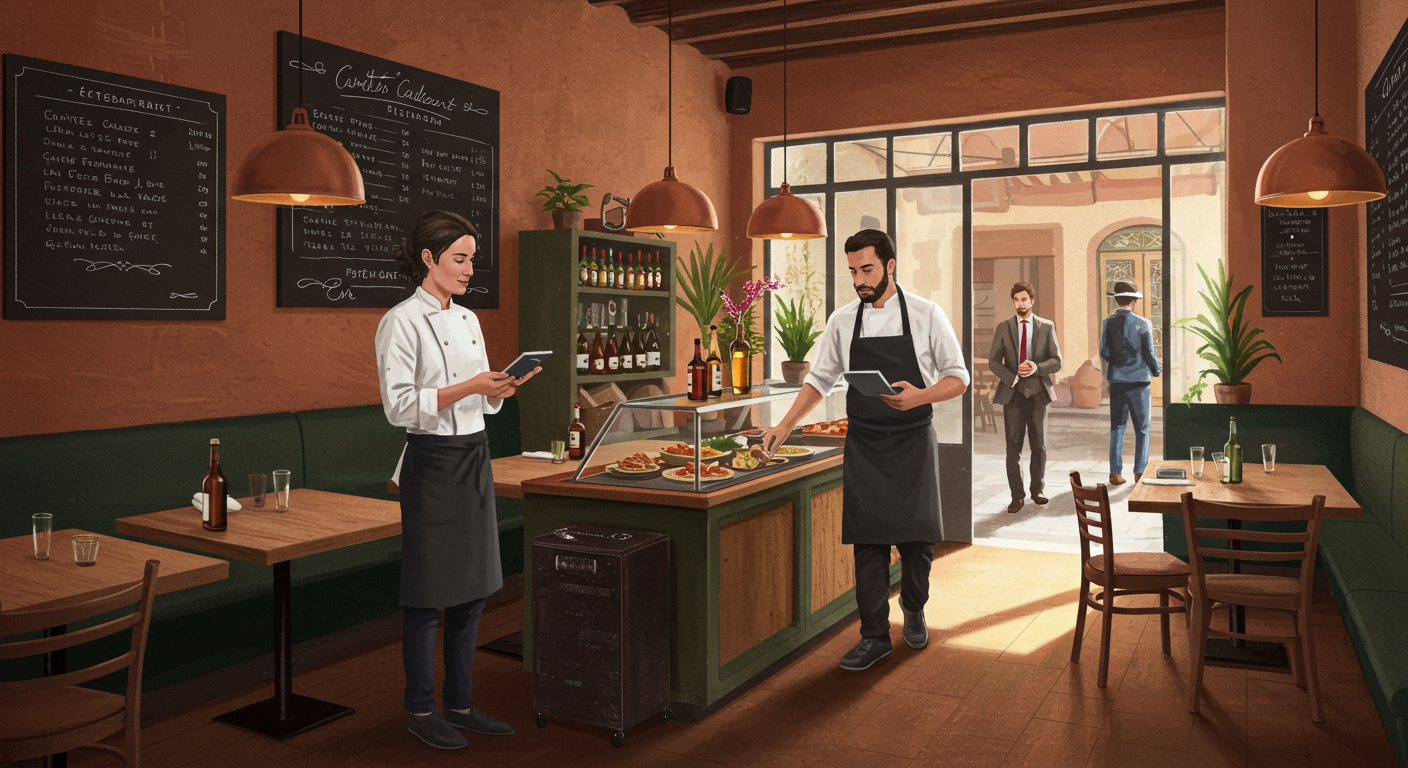
A satisfied customer leaves your restaurant after an excellent dinner. They loved the experience and want to share it with the people they care about. But how? A Google review is nice. Word of mouth is better. But a restaurant gift card they give to a colleague, their mother-in-law, or their best friend? That's a new customer walking through your door, pre-qualified and motivated.
Restaurant gift cards are a lever that many independent restaurateurs underuse — or ignore entirely. Too often seen as a tool reserved for large chains, they're actually accessible to any establishment. And crucially, they address three concrete challenges: generating immediate cash flow, acquiring new customers without advertising spend, and collecting valuable data for your CRM.
This comprehensive guide walks you through every step: why you should get started, how to structure your offering, what legal obligations to meet, and how to turn every card sold into a loyalty-building machine.
Why restaurant gift cards are a strategic lever in 2026
A booming experiential gifting market
The gift card market is worth several billion pounds per year across all categories. And within this market, the share of experiences — including dining — grows year on year. Consumers are steadily moving away from material goods in favour of shared moments.
For an independent restaurateur, this trend is a direct opportunity. Unlike a voucher for a national retail chain, a restaurant gift card carries a powerful emotional dimension: you're giving someone a dinner, a culinary discovery, a moment for two. That's exactly what gift buyers are looking for, particularly for occasions like birthdays, Christmas, Mother's Day, or Valentine's Day.
As highlighted in our 2026 digital restaurant industry barometer, the digitisation of customer journeys is accelerating across independent restaurants. Digital gift cards fit perfectly within this trend.
Three tangible benefits for your business
1. Immediate cash flow
When a customer buys a £70 gift card, you receive £70 immediately. The meal itself will be consumed later — sometimes several months down the line. This gap between payment and service delivery creates a positive cash flow effect, particularly valuable during quiet periods.
Better still: a proportion of gift cards sold are never redeemed. Internationally, estimates vary by sector, but the phenomenon of "breakage" (unredeemed cards) is well documented. A word of caution, however: in many jurisdictions, unclaimed funds remain subject to specific accounting and legal obligations (more on this below).
2. Zero-cost customer acquisition
Every gift card given brings a potential new customer into your restaurant. And not just any customer: someone who comes on a personal recommendation, with positive expectations. This mechanism of incentivised word of mouth is far more powerful than a Facebook ad or a flyer handed out on the street.
The gift card recipient discovers your establishment under ideal conditions: they pay nothing (or very little), they're in a "gift" mindset, and they associate your restaurant with a pleasant occasion. The perfect conditions for turning them into a regular — provided you manage the post-visit experience well.
3. CRM data and loyalty building
This is perhaps the most underestimated benefit. Every gift card sale gives you access to two contacts: the buyer and the recipient. Two people, two email addresses, two potential phone numbers — two profiles to integrate into your CRM.
The buyer is already a customer (they know your restaurant). The recipient is a qualified prospect. With the right follow-up, you can turn this single transaction into a lasting relationship with both. We'll detail the associated CRM strategies later in this article.
How to structure your restaurant gift card offering
The different formats available
Not all formats are equal, and the right choice depends on your positioning and clientele. Here are the main options:
- Open-value gift card: the customer chooses the amount (£25, £50, £100, etc.). The most flexible format, suitable for all budgets. Simple to set up.
- Fixed-value gift card: you offer 3 to 4 tiers (£35, £60, £100 for example). Simplifies the choice for the buyer and lets you calibrate around your average spend.
- Experience card: instead of a monetary value, you sell an experience — "Tasting menu for 2", "Sunday brunch with champagne", "Cooking class + dinner". A more premium format, perceived as more impressive to give.
- Multi-use card: redeemable across multiple visits, with the balance decreasing each time. Practical for higher amounts.
Setting the right price tiers
To set your tiers, start from your average spend per head. If your average cover is £30 per person:
- Tier 1 (entry-level): £30–35 — a meal for one
- Tier 2 (standard): £60–70 — dinner for two
- Tier 3 (premium): £100–130 — a complete experience for two with wine
The middle tier is typically the best seller. This is the classic anchoring effect: positioned between a "too basic" option and a "luxury" option, it appears to offer the best value for money.
Practical tip: offer an "experience" tier above your premium tier. Even if it rarely sells, it makes your standard offering appear more accessible by comparison.
Physical, digital, or both?
The physical card remains popular for gifts given in person. A beautiful card in quality packaging, slipped into an elegant envelope, creates an "unboxing" effect that digital simply can't replicate. However, it involves printing costs, stock management, and sales limited to on-site or postal delivery.
The digital card (e-gift card) is sent by email or SMS, with a unique code. It can be purchased 24/7 from your website, which is crucial for last-minute buyers (Christmas Eve at 11pm, for example). It's also simpler to manage: no physical stock, automatic traceability, and possible integration with your CRM.
The best approach for most independent restaurateurs: offer both. Physical for those who visit the restaurant, digital for online sales. If you must choose just one format to start with, go digital — the cost-to-reach ratio is unbeatable.
To build an effective online presence without complexity, our guide on simple digitalisation for small restaurants covers the essential steps.
Legal and tax framework for restaurant gift cards
What the law says
Gift cards are not payment instruments in the strict regulatory sense. They are vouchers — single-use or multi-use — governed by general consumer protection and contract law.
Key points to understand:
- Validity period: you are generally free to set the validity period of your gift cards. However, an unreasonably short period may be deemed unfair under consumer protection rules. The standard practice in the restaurant industry is 12 months. Some establishments extend to 18 months for higher amounts. Whatever you choose, the expiry date must be clearly stated at the point of purchase.
- Terms and conditions: these must be communicated to the buyer before purchase. Clearly state: the value, the validity period, any restrictions (days of use, applicable menus, party size), and the non-refund policy.
- Cooling-off period: for online sales, a 14-day right of withdrawal typically applies (varying by jurisdiction), unless the card has already been used. For in-person sales, there is generally no statutory cooling-off right (the customer may request a goodwill gesture, but you are not obliged).
Accounting and tax treatment
The sale of a gift card is not revenue at the point of sale. It is deferred income. Revenue is recognised when the card is actually redeemed — that is, when the recipient comes to dine.
In practice:
- At the point of sale: you record the payment as a liability (deferred income or advance payments received). VAT is not due at this stage.
- At redemption: you transfer the amount to revenue and VAT becomes due at the applicable rate for your services.
- At expiry (unredeemed card): the unused amount is transferred to exceptional income. VAT treatment may vary — consult your accountant for the correct approach in your jurisdiction.
Strong recommendation: consult your accountant to establish the correct accounting treatment. Rules vary depending on your tax regime, jurisdiction, and the exact nature of your cards (monetary value vs. specific experience).
Data protection obligations
If you collect personal data during gift card sales (name, email, phone number of the buyer and/or recipient), you are subject to data protection regulations (GDPR in the UK and EU). The essential points:
- Consent: clearly inform buyers about how their data will be used and obtain their consent for marketing communications.
- Purpose limitation: data collected for gift card management cannot automatically be used for marketing — separate consent is required.
- Right of access and deletion: buyers and recipients must be able to access their data and request its deletion.
This framework isn't a barrier. On the contrary, a well-designed order form with clear consent checkboxes allows you to build a clean, legally compliant contact database.
Selling your restaurant gift cards effectively: channels and promotion
On-site: your primary sales channel
Your restaurant is your best point of sale. Your current customers, satisfied with their experience, are the first potential buyers. But they need to know you offer gift cards.
Concrete actions to implement:
- Visible signage: a display at the till, a visual on the counter, a mention on the dessert menu or the bill. No need for expensive point-of-sale materials — a well-designed A5 table tent is enough.
- Staff training: your servers and front-of-house team need to know the offering and how to suggest it naturally. The best moment? When a customer says "That was excellent" or "I'll be back." Natural response: "Did you know we also offer gift cards? Many of our customers give them for birthdays."
- Key periods: increase visibility before Christmas, Valentine's Day, Mother's Day and Father's Day. These four periods account for the majority of gift card purchases. To turn these occasions into lasting relationships, discover our strategies for building customer loyalty in your restaurant.
Online: your 24/7 shopfront
A dedicated page on your website is essential. It should be:
- Easy to find: a visible link in the main navigation ("Gift Cards" or "Give a Gift"), not buried in a sub-menu.
- Simple to use: choice of amount or experience, message personalisation, online payment, immediate email delivery. The fewer steps, the more you convert.
- Mobile-optimised: the majority of online gift card purchases are made on smartphones, often on the go (during a commute, on a lunch break).
The website question is broader: if you don't yet have a solid online presence, our article does a restaurant still need a website in 2026? will help you make the right decision.
Social media and email: amplifying sales
On Instagram and Facebook:
- Post attractive visuals of your gift cards, especially before key gifting periods.
- Use stories with the link sticker to drive traffic to your purchase page.
- Show the product in context: a customer giving the card, a couple using it at the restaurant.
By email:
- Send a dedicated campaign to your customer base 2 to 3 weeks before each gifting occasion.
- Effective subject line: "The gift idea [recipient's name] will love" rather than "Our gift cards are now available."
- Include a direct purchase button in the email to reduce friction.
Advanced tip: offer your best customers (identified via your CRM) an exclusive deal — for example, a £100 gift card sold for £90 during a limited window. You lose £10 in margin, but you gain a new customer and you reward the buyer's loyalty.
Corporate gifting: an underestimated B2B channel
Corporate buyers represent a substantial sales channel for gift cards. Companies have dedicated budgets for employee rewards, client gifts, and team events — and restaurant vouchers are among the most popular options.
To reach corporate buyers in your area:
- Identify businesses with 50+ employees within a 10km radius of your restaurant.
- Create a specific corporate offer: volume discount (5–10% above £500 in purchases), cards personalised with the company name, single invoicing.
- Contact HR managers or office managers directly (LinkedIn, email) with a clear proposal.
A single corporate account can represent 20, 50, or even 100 gift cards sold at once. It's a massive acquisition lever with concentrated commercial effort.
Gift cards and CRM: turning every sale into a lasting relationship
Capturing data at every stage
The gift card journey naturally generates data touchpoints:
- At purchase: name, email, phone number of the buyer. Possibly the date of the occasion (birthday, etc.).
- At delivery: name, email of the recipient.
- At redemption: visit date, amount spent (often more than the card value), dishes ordered.
Each data point is a building block for your CRM. The goal isn't to collect for the sake of collecting, but to build actionable profiles for targeted marketing.
Concrete CRM automation scenarios
Here are five scenarios you can implement with a restaurant-focused CRM:
Scenario 1 — Follow-up with unconverted recipients The recipient used their card but never came back? Send them an email 15 days after their visit: "Did you enjoy your dinner? Get 10% off your next booking." Cost: virtually nothing. Potential: one more regular customer.
Scenario 2 — Expiry reminder Send an automatic reminder to the recipient 30 days before their card expires. Then a second one at 7 days. The majority of last-minute redemptions are triggered by these reminders. It's also a form of customer service that people genuinely appreciate.
Scenario 3 — Anniversary re-engagement of the buyer The buyer gave a card in December for a birthday? Note the date and reach out the following year: "Last year, you gave a gift card for [name]. How about this year?" The repurchase rate on this type of prompt is remarkable.
Scenario 4 — Post-redemption upsell The recipient spent £80 with a £60 card (they paid £20 out of pocket)? Send them an offer to buy a gift card to give in turn, capitalising on their own positive experience.
Scenario 5 — Ambassador programme Identify repeat buyers (those who give cards multiple times a year) and offer them "ambassador" status: exclusive perks, menu previews, invitations to events. These customers are your best salespeople — treat them accordingly.
For more on local acquisition strategies that complement your gift card programme, see our guide on local restaurant marketing.
Measuring your programme's performance
Key metrics to track:
- Number of cards sold per month and per channel (on-site, online, corporate)
- Redemption rate: percentage of cards actually used. If this rate is very low, your offering or your communication needs attention.
- Average spend of cardholders: typically, gift card customers spend more than the card's face value. Measure this uplift.
- Conversion rate to regular customer: among gift card recipients, how many return within the following 6 months?
- Incremental revenue: turnover generated by gift cards that would not have existed without them (new customers, additional spend).
Common mistakes to avoid with restaurant gift cards
Mistake #1: Launching without promoting
Creating gift cards and quietly placing them on the counter isn't enough. Without active communication — signage, staff mentions, social media posts, email campaigns — your customers simply won't know the offering exists. Gift cards don't sell themselves.
Mistake #2: A complicated online purchase journey
If buying online requires creating an account, filling in 12 fields, and clicking through 4 screens, you'll lose the majority of buyers along the way. The market standard is a purchase completed in under 2 minutes, payment included.
Mistake #3: Neglecting the recipient's experience
The recipient arrives with their gift card. If the welcome is lukewarm, if the server doesn't know how to process the card, or if the recipient feels like a "second-class" customer because they're not paying, you've missed the point. The recipient should have the best possible experience — they're a potential future regular, and they were personally recommended by the buyer.
Mistake #4: Not tracking issued cards
Without a tracking system, you lose sight of cards sold, redeemed, and expired. You can't follow up with recipients, you don't control your financial liability, and you don't know whether your programme is profitable. A well-structured spreadsheet is enough to start; a dedicated management tool (integrated with your till or CRM) is preferable long-term.
Mistake #5: Setting too short a validity period
A card valid for just 3 months creates frustration for recipients who haven't had time to use it. The result: a negative review, bad word of mouth, and a customer lost before they even walked through your door. Twelve months is the reasonable minimum.
Mistake #6: Ignoring seasonality
Demand for gift cards isn't linear. It peaks in December (Christmas), February (Valentine's Day), and May–June (Mother's and Father's Day). If you don't prepare your communication and physical stock ahead of these peaks, you'll miss the majority of your annual sales potential.
Technical considerations: setting up your gift card system
Minimalist solution (zero budget)
You can start tomorrow with no technical investment:
- Format: a paper voucher printed on quality card stock, with a unique number written by hand or pre-printed.
- Tracking: an Excel or Google Sheets file with columns for: card number, amount, purchase date, buyer, recipient, expiry date, status (active/redeemed/expired).
- Online sales: a simple contact form with bank transfer or payment link (Stripe, PayPal).
This solution works for up to about 10–15 cards per month. Beyond that, manual management becomes time-consuming and error-prone.
Intermediate solution: dedicated tools
Several SaaS platforms offer gift card management for restaurants, including:
- Automatic generation of unique codes
- Customisable online sales page
- Automatic email delivery to the recipient
- Balance and redemption tracking
- Integration with your POS system
- Sales dashboard
Platforms like ALaCarte.direct incorporate this within a broader approach to customer relationship management, connecting gift cards to your CRM, digital menu, and the restaurant's online presence.
Integration with your POS system
Ideally, your gift card solution should be connected to your point-of-sale system. When processing payment, the server scans the code or enters the card number, and the amount is automatically deducted. The benefits:
- No calculation errors
- Automatic traceability
- Remaining balance management for multi-use cards
- Usage data fed back into your management system
If direct integration isn't possible, a simple process will do: the server verifies the card in the dedicated system, manually applies the discount at the till, and updates the card's status.
Maximising impact: advanced strategies for your restaurant gift cards
The gift card as a win-back tool
Have customers who haven't returned in 6 months or more? Send them a special offer: "Treat someone to dinner and receive a £15 voucher for yourself." You reactivate a dormant customer AND acquire a new one.
Corporate gift cards
Beyond general corporate gifting, target businesses directly for:
- Client gifts: companies are looking for original, local gifts to thank their clients. A dinner at a quality independent restaurant in the neighbourhood is more memorable than yet another generic gift hamper.
- Employee incentives: performance bonuses, leaving gifts, work anniversaries. Restaurant gift cards are a well-received perk.
- Team events and after-work drinks: offer "gift card + private dining" packages for corporate events.
Themed and seasonal gift cards
Refresh your offerings regularly to create repeat purchase opportunities:
- Christmas: festive-themed card, "Festive menu for 2" tier
- Valentine's Day: "Romantic dinner" card with a special menu
- Mother's / Father's Day: "Family brunch" card
- September: "Reunion dinner with friends" card
Each theme is an opportunity for a targeted communication campaign and fresh content across your social media channels.
Local cross-promotions
Partner with other local businesses to create combined gift cards:
- Restaurant + florist: "Dinner + bouquet"
- Restaurant + spa: "Brunch + relaxation treatment"
- Restaurant + independent bookshop: "Dinner + book"
These partnerships expand your potential customer base to your partners' clientele, and vice versa. They also strengthen your local presence — a major asset for an independent restaurateur. Our article on 10 free marketing strategies to fill your restaurant explores other approaches in this vein.
Action plan: launch your gift card programme in 7 days
No need to plan for three months. Here's a realistic one-week action plan:
Days 1–2: Decision and scoping
- Define your price tiers (2 to 4 tiers)
- Draft your terms and conditions (validity period, restrictions, refund policy)
- Choose your starting format (physical, digital, or both)
Day 3: Creating your materials
- Print physical cards (even simple ones) or set up your digital solution
- Create a visual for your social media
- Prepare an announcement email for your customer base
Day 4: Operational setup
- Create your tracking file (Excel/Google Sheets) or configure your tool
- Train your team: how to suggest the card, how to process payment, how to welcome a recipient
- Install your on-site signage (counter, till, tables)
Day 5: Launch
- Post on your social media
- Send your email campaign
- Activate the page on your website
Days 6–7: First feedback
- Gather feedback from your team: does the suggestion feel natural? Is the process smooth?
- Adjust as needed (wording, payment process, visibility)
Conclusion: the gift card is far more than a voucher
Restaurant gift cards aren't a marketing gimmick. They're a genuine business tool that impacts your cash flow, customer acquisition, and CRM strategy. But only if you take them seriously: a clear offering, a simple purchase journey, regular communication, and rigorous data tracking.
What separates gift card programmes that thrive from those that stagnate is consistency. You don't need a massive budget or a complex technical setup. You need regularity: mentioning the cards at the right moment, following up at the right time, and making use of the data you collect.
Start small. One format, two tiers, tracking on a spreadsheet. Measure the results over three months. Then iterate: add a sales channel, connect your CRM, test corporate offers.
The best gift card you'll sell this year is the one you decide to offer starting tomorrow.