ALaCarte.Direct
Introduction
The restaurant industry is undergoing an unprecedented transformation. After years of upheaval caused by the pandemic, 2026 marks a turning point: diners no longer come back simply for good food — they expect a complete, seamless and personalised experience.
According to a recent study by the FAFIH (France's Hospitality Industry Training Fund), 78% of French restaurateurs consider digitalisation a priority, yet only 34% have actually taken the plunge. This hesitation is creating a widening gap between venues that innovate and those struggling to keep up — a pattern reflected across the global hospitality sector.
In this article, we break down the 5 major digital trends redefining the restaurant industry in 2026 and how to adopt them in practice to stay competitive.
1. The Digital Menu: From Emergency Measure to Strategic Asset
From a makeshift QR code to an intelligent menu
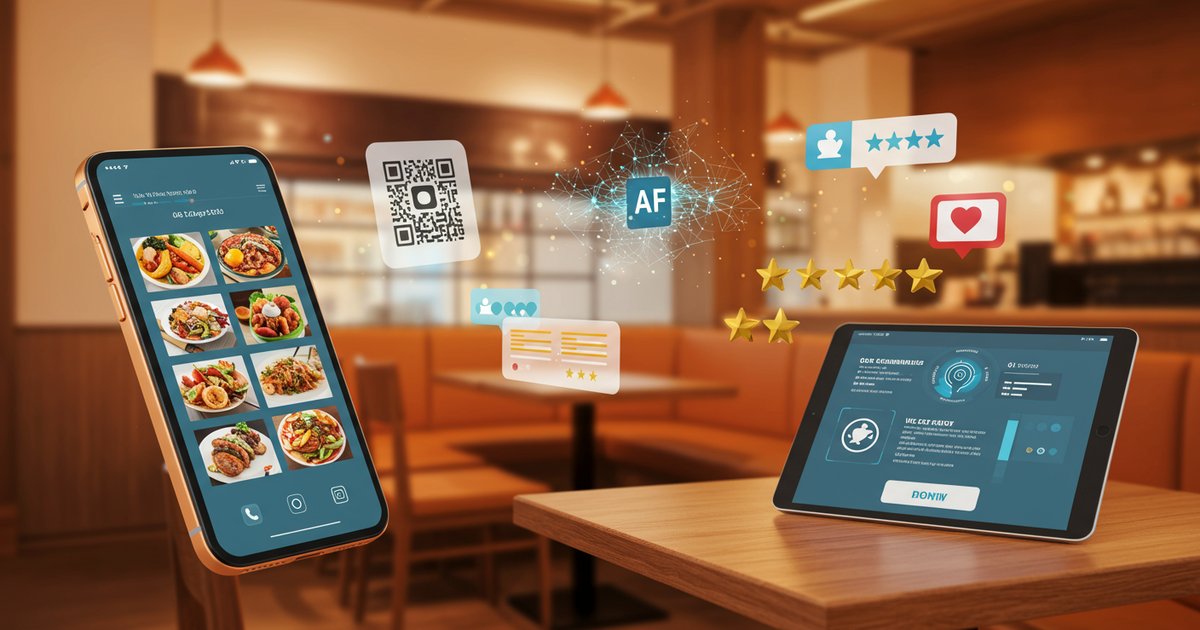
In 2020, the QR code menu was an emergency fix. In 2026, it has become a strategic differentiator. Guests scan a QR code not out of health obligation, but because it genuinely adds value:
- Rich content: HD photos of dishes, clear allergen information, chef's recommendations
- Instant multilingual support: Translations in 12 languages without costly reprinting
- Real-time updates: Daily specials, out-of-stock items, dynamic pricing based on demand
The numbers speak for themselves
According to a 2025 study by NPD Group France, 62% of French diners now prefer a digital menu over a paper one, particularly in major cities. The top reasons cited:
- Hygiene (41%)
- Convenience (35%)
- Detailed information (24%)
For restaurateurs, the benefits are equally tangible:
- Average saving of £2,000/US$2,500 per year on menu printing
- A 70% reduction in time spent updating menus
- A 15% increase in average spend per cover thanks to enriched descriptions
How to roll out your digital menu successfully
❌ Common mistakes to avoid:
- QR codes with no context (the guest doesn't know what to scan)
- A non-responsive PDF menu (unreadable on mobile)
- Loading times over 3 seconds (high abandonment rate)
✅ Best practices:
- Clear signage: "Scan to view our menu"
- Responsive design: Optimised for all screen sizes
- Visual content: Professional photos of your signature dishes
- Easy updates: A simple interface for your team
💡 ALaCarte Tip: With ALaCarte.Direct, you can create your QR code menu for free in under 10 minutes. No technical skills required — update instantly from any device.
2. AI-Powered Personalisation: Every Guest is Unique
Beyond "Good evening, Mr Smith"
Artificial intelligence is transforming the relationship between restaurateurs and their guests. In 2026, recommendation engines are no longer the preserve of Netflix and Amazon: they're arriving in your restaurant.
Real-world use cases:
a) Smart dietary recommendations
- Automatic detection of allergies flagged during previous visits
- Dish suggestions based on past preferences
- Portion adjustments depending on the occasion (quick lunch vs. leisurely dinner)
b) Experience optimisation
- Real-time kitchen wait-time predictions based on current demand
- Proactive alerts when a favourite dish is back on the menu
- Smart pairing suggestions (intelligent upselling)
The human touch remains central
A word of caution: AI is a tool, not a replacement. Guests come for the human connection — the smile, the personalised recommendation from their server. AI should enhance these interactions, not replace them.
Success story: "Le Comptoir Moderne," a restaurant in Lyon, uses an AI system to identify regular guests as soon as they book. The server receives a discreet notification with their preferences. The result: +28% in customer satisfaction and +40% in repeat visits.
3. Online Ordering: It's No Longer Just About Delivery
Click & collect becomes the norm
While delivery boomed during the pandemic, 2026 is seeing the massive rise of click & collect and at-table ordering via smartphone.
The new use cases:
a) Pre-ordering
- The guest orders 30 minutes before arriving
- No more waiting — immediate service on arrival
- Optimised kitchen workflow
b) At-table ordering without a server
- QR code on the table → order directly
- Integrated payment
- Frees up staff for advice and hospitality
c) Group pre-ordering
- For businesses (team lunches)
- For family events
- Simplified management of large parties
Market figures
According to NPD Group France, click & collect now accounts for 18% of urban restaurant revenue, up from 7% in 2023. Growth is driven by:
- Time-pressed professionals (72% of users)
- Families with children (pre-ordering to avoid the wait)
- Groups of friends (easy bill splitting)
Operational impact:
- A 20% reduction in order errors (direct customer input)
- A 12% increase in average spend per cover (automatic suggestions)
- Smoother service during peak hours
4. Online Reputation Management: Your Digital Presence Matters More Than Your Location
Google Business Profile: Your new shopfront
In 2026, 64% of diners discover a restaurant via Google Maps, not by walking past it. Your Google Business Profile is your first impression.
The critical elements:
- Recent, professional photos (menu, dishes, interior, exterior)
- Up-to-date opening hours (nothing is more frustrating than finding a restaurant closed when Google says "open")
- Visible menu (direct integration or a link to your digital menu)
- Responses to reviews (100% of reviews — positive and negative)
Google 2025 statistics:
- Restaurants with 50+ reviews: +45% clicks to website
- Restaurants responding to 80%+ of reviews: average rating +0.4 stars
- Restaurants with HD photos: +32% in bookings
Customer reviews: Gold or poison
The golden rule: Respond to ALL reviews within 48 hours.
Received a bad review? Your response matters more than the review itself.
❌ Defensive response:
"Your review is unfair — we do our best."
✅ Constructive response:
"Thank you for your feedback. We're sorry your experience didn't meet expectations. We take your comments very seriously and have already made changes to [specific action]. We'd love the chance to welcome you back and show you the improvements we've made."
Measurable impact: Restaurants that actively manage their reviews have an average rating 0.6 stars higher than those that ignore them.
5. Community Engagement: From Customers to Members
Building a community, not just a customer base
The restaurants succeeding in 2026 no longer settle for having customers: they build engaged communities.
Tools and strategies:
a) Targeted newsletters
- Segmentation by preferences (vegetarian, meat-lover, gluten-free)
- Exclusive announcements (new dishes, private events)
- Personalised offers (birthdays, loyalty rewards)
b) Authentic social media
- Behind-the-scenes kitchen stories (transparency, personality)
- Polls to involve guests in new additions to the menu
- UGC (User Generated Content): reposting guest photos
c) A modernised loyalty programme
- Points earned via app or QR code
- Personalised rewards (not just "10% off")
- Priority access to special events
Inspiring case study: "La Table Ronde" (Bordeaux)
This 45-cover restaurant created a community club featuring:
- A weekly newsletter (7,800 subscribers)
- Monthly private evenings for members (£40/US$50 per year)
- Co-creation of dishes through community voting
Results:
- Occupancy rate: 94% (vs. 67% national average)
- Average spend per cover: +22% for members
- Word of mouth: 58% of new guests come through personal recommendations
How to Get Started Today
The 3 Priority Actions
1. Digitise your menu (1 hour of work)
- Create your free QR code menu on ALaCarte.Direct
- Print your QR codes (table tents, stickers)
- Train your team to introduce the digital menu to guests
2. Optimise your Google Business Profile (2 hours of work)
- Check your opening hours
- Upload at least 10 HD photos
- Respond to your 10 most recent reviews
3. Launch a simple newsletter (1 hour/week)
- Free tools: Mailchimp, Brevo
- Collect emails at the till (tablet + incentive)
- Weekly send: 1 new dish + 1 behind-the-scenes story + 1 offer
A Realistic Budget
With £0/US$0 investment:
- ALaCarte.Direct digital menu: free
- Google Business Profile: free
- Mailchimp newsletter (0–500 contacts): free
With £250/US$300 per month:
- Online ordering solution: ~£125/US$150 per month
- Professional photographer (once per quarter): ~£330/US$400 → ~£110/US$133 per month averaged out
- Local Facebook/Instagram advertising: ~£40/US$50 per month
Expected ROI:
- Increase in average spend per cover: +12 to 15%
- Reduction in printing costs: -£170/US$200 per month
- Customer retention: +25% more regular guests within 6 months
Conclusion: Digital is No Longer Optional — It's Essential
The digital transformation of the restaurant industry is not a passing trend. It is a structural shift in customer expectations that will only accelerate.
The restaurateurs succeeding in 2026 have understood 3 things:
- Digital amplifies the human touch — it doesn't replace it
- Starting small is better than doing nothing (a simple QR code menu is worth more than a grand project that never gets off the ground)
- Guests want transparency, personalisation and simplicity
You don't need a £40,000/US$50,000 budget or a digital agency. You need to get started with simple, effective tools.
Ready to take the leap?
👉 Create your free digital menu in 10 minutes at ALaCarte.Direct
👉 Need personalised advice? Get in touch with our team: [email protected]
Found this article useful? Share it with fellow restaurateurs who could benefit!
Join our community: Receive weekly industry trend analysis, practical tools and restaurateur success stories straight to your inbox. → Subscribe to the ALaCarte newsletter