ALaCarte.Direct
Introduction: The Hospitality Sector's Digital Transformation
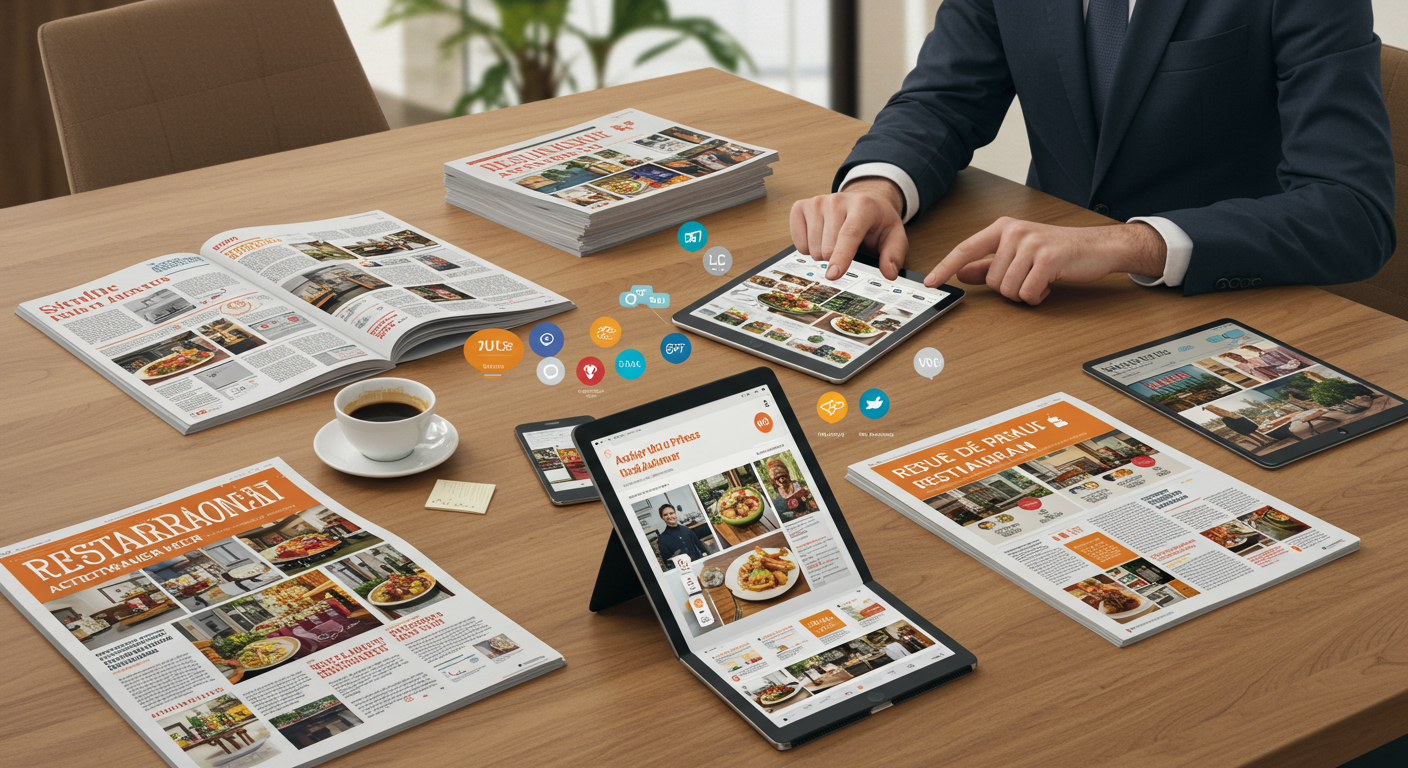
March 2026 marks a strategic turning point for the restaurant and hospitality industry. Between technological innovations, landmark events, and shifting consumer expectations, hospitality professionals must stay on top of the major developments shaping their industry more than ever.
This monthly press review gives you a comprehensive overview of the news, trends, and opportunities defining the future of the restaurant industry in 2026.
🎯 Food Hotel Tech 2026: The Must-Attend Event with Exceptional Speakers
A trade show gaining serious momentum
Food Hotel Tech has established itself as the leading tech and CSR event dedicated 100% to the HoReCa sector in France. After an already impressive 2025 edition that attracted several thousand professionals, the 2026 edition is stepping up decisively with exceptional confirmed speakers and an enhanced programme.
The event, organised by FHT EVENTS (29 rue du Pilier, 93300 Aubervilliers, France), positions itself as the go-to platform for discovering the technological innovations and CSR initiatives transforming the restaurant and hospitality trades.
High-profile speakers confirmed
The Food Hotel Tech commercial team recently announced the confirmation of renowned speakers for the 2026 edition. While the full line-up will be revealed progressively in the coming weeks, the organisers are already promising:
- Leaders from innovative restaurant chains
- Technology experts specialising in the HoReCa sector
- Pioneers of CSR transition in the restaurant industry
- Real-world case studies of successful digitalisation
The full conference programme will be published shortly on the official sessions page.
Why Food Hotel Tech matters for restaurateurs in 2026
In a context where technology and corporate social responsibility have become essential competitive levers, Food Hotel Tech offers hospitality professionals:
1. A forward-looking vision of the sector
Conferences and panel discussions help you anticipate technological shifts (artificial intelligence, automation, cloud solutions) and regulatory changes (environmental standards, traceability, digital accessibility).
2. Qualified B2B networking
The show brings together solution providers, integrators, tech vendors, and restaurant decision-makers, creating an ecosystem ripe for strategic partnerships.
3. A practical CSR focus
Food waste reduction, circular economy, local sourcing, carbon footprint — sustainability challenges are at the heart of every conversation.
4. Live demonstrations
Exhibitors showcase their innovations in real-world conditions: next-generation POS systems, stock management tools, reservation apps, contactless payment solutions, kitchen robots…
How to attend and prepare
For trade visitors:
Admission is free with registration. Restaurateurs, hospitality managers, technical directors, and digital leads can register directly on the official website.
For potential exhibitors:
Tech companies wishing to showcase their solutions can contact the commercial team:
- Phone: +33 (0)6 64 93 73 94
- Email: [email protected]
💡 Our recommendation:
Prepare your visit by setting clear objectives (solution sourcing, industry benchmarking, networking) and reviewing the programme as soon as it's published. Prioritise interactive sessions and don't hesitate to engage with exhibitors for personalised demos.
📊 Artificial Intelligence and the Restaurant Industry: Where Do We Stand in 2026?
Generative AI enters the kitchen… and the dining room
2026 confirms the widespread integration of artificial intelligence across every link in the restaurant value chain.
In the kitchen:
- Recipe optimisation: Chefs are using AI algorithms to adjust their recipes based on available stock, declared allergies, and recorded customer preferences.
- Demand forecasting: AI systems analyse sales history, weather, local events, and trends to accurately predict required volumes, cutting waste by 20 to 30%.
- Quality control: Smart cameras verify cooking, plating, and even food safety compliance in real time.
Front of house:
- Advanced chatbots: Conversational assistants now handle 40% of online reservations with an 85% customer satisfaction rate.
- Personalised recommendations: AI suggests dishes based on taste profiles, previous orders, and even mood detected through sentiment analysis.
- Schedule optimisation: Algorithms dynamically adjust staff rotas based on predicted footfall.
In management:
- Predictive analytics: Restaurateurs can forecast their financial performance with 90% accuracy thanks to machine learning models.
- Fraud detection: AI automatically flags anomalies in till transactions or stock levels.
Limitations and necessary safeguards
Despite these advances, several areas require caution:
1. Technology dependency
A system outage can bring operations to a standstill. Business continuity demands robust backup solutions.
2. Data protection
The mass collection of customer data (preferences, allergies, habits) raises ethical and legal questions around data privacy regulations (GDPR, consent).
3. The human factor
AI must remain a support tool, not a replacement. The customer experience still depends on the quality of human hospitality, empathy, and staff expertise.
4. Implementation costs
Small and medium-sized hospitality businesses may be held back by upfront investment. Affordable and scalable SaaS (Software as a Service) solutions are emerging to make AI accessible to all.
🌱 CSR and Sustainability: From Obligation to Opportunity
New regulatory requirements for 2026
The legislative framework around corporate social and environmental responsibility is tightening significantly in 2026:
Anti-Waste Legislation (2026 extension):
- The obligation to offer takeaway containers for leftovers now extends to venues with fewer than 20 covers.
- Ban on single-use plastic containers for takeaway (strictly enforced).
- Increased penalties: fines of up to €15,000 (approximately £13,000 / $16,500) for non-compliance.
Environmental labelling:
- National pilot scheme for displaying the carbon footprint of dishes (voluntary in 2026, mandatory from 2027 for chains with more than 50 locations).
- Standardised methodology validated by France's ecological transition agency (ADEME) in January 2026.
Local and organic sourcing:
- Contract catering: the 50% threshold for sustainable and quality produce is maintained, with stricter enforcement.
- Commercial restaurants: tax incentives for establishments sourcing 30% of their produce locally (within a 150-mile radius).
Inspiring initiatives from the sector
Many restaurateurs are turning these constraints into competitive advantages:
Zero waste in practice:
Pioneering establishments are achieving 90% waste recovery (composting, anaerobic digestion, partnerships with local farmers for animal feed).
Circular cuisine:
Making the most of every ingredient: peelings turned into crisps, fish bones into smoked stock, stale bread into artisan breadcrumbs… These practices generate up to 15% additional gross margin.
Farm-to-fork partnerships:
Direct contracts with local producers, guaranteeing freshness, traceability, and powerful storytelling for your marketing.
Radical transparency:
Voluntarily displaying provenance, certifications, calorie counts, and carbon footprint… An approach that builds loyalty among an increasingly discerning clientele.
💳 Payment and POS: The New Trends for 2026
The beginning of the end for cash?
While cash still accounted for 30% of restaurant transactions in 2020, that figure has dropped to less than 12% as of early 2026. Several factors explain this shift:
1. The rise of contactless payments
Higher transaction limits (£100 for cards, unlimited for smartphones with biometric authentication) have accelerated adoption.
2. Buy now, pay later solutions
Klarna, Alma, PayPal Pay in 3… These services are now making their way into restaurants for larger bills (group dinners, events).
3. QR code payments
Particularly popular in quick-service restaurants and food trucks, they allow customers to order and pay directly from their smartphones.
4. Digital wallets
Apple Pay, Google Pay, as well as proprietary chain solutions (digital loyalty cards with integrated payment).
Smart point of sale
Next-generation POS systems now integrate:
- Real-time stock management: Automatic stock deduction, low-stock alerts.
- Built-in CRM: Customer recognition, purchase history, loyalty programmes.
- Advanced analytics: Real-time dashboards (revenue, average spend, best-sellers, peak and off-peak hours).
- Automated tax compliance: Automatic reporting to tax authorities, compliant till certification.
- Multi-channel: Synchronisation of dine-in, takeaway, delivery, and click & collect sales.
Leading solutions in 2026:
Zelty, Sunday, Innovorder, SumUp, Lightspeed… The market is consolidating around cloud-based, modular, and scalable platforms.
🚀 Click & Collect and Delivery: The Battle for Margins
Rebalancing the power dynamics
After years of near-monopolistic dominance by delivery platforms (charging commissions of 25 to 35%), 2026 is seeing a strategic rebalancing:
1. In-house solutions
More and more restaurateurs are building their own online ordering systems (website, mobile app), integrated with their POS and stock management.
2. Lower-commission alternatives
Platforms like Ankorstore, Nestor, or Coopcycle offer commissions of 10 to 15%, or even zero fees for cooperatives.
3. Local partnerships
Collectives of restaurateurs are pooling resources to create neighbourhood platforms, dramatically reducing costs.
4. Hybrid models
Using major platforms (Uber Eats, Deliveroo) for customer acquisition, then incentivising a switch to your own website through loyalty programmes.
Optimising click & collect
Click & collect (order online, pick up in-store) is showing 45% growth in 2026 compared to 2025. Its advantages:
- Zero delivery commission
- In-store footfall (upselling opportunities)
- Full control over the customer experience
- Protected margins
Restaurateurs are investing in:
- Optimised collection slots (reducing wait times)
- Dedicated spaces (collection counters, smart lockers)
- Clear communication (SMS confirmation, pre-collection reminders)
🎓 Training and Recruitment: The HR Challenge Persists
The skilled labour shortage
Despite technological innovations, the hospitality sector continues to face a structural shortage of qualified staff. The 2026 figures:
- 150,000 unfilled positions in France alone
- Average turnover of 60% in quick-service, 35% in full-service restaurants
- Recruitment difficulties cited by 78% of managers
New strategies for attracting talent
Establishments that succeed in recruiting and retaining staff are adopting innovative practices:
1. Flexible scheduling
Collaborative apps that let employees manage their own availability and swap shifts.
2. Continuous professional development
Clear career progression pathways, certifications, and access to digital training (industry-specific online courses).
3. Competitive pay
Performance-linked variable pay, profit-sharing schemes, and exceptional bonuses.
4. Quality of working life
Modern equipment (breathable technical clothing, ergonomic non-slip shoes), comfortable break areas, and mental health support.
5. Employer branding
Active social media presence, employee testimonials, and showcasing internal career progression.
Hybrid training (in-person + digital)
Training in the hospitality sector is shifting towards hybrid formats:
- E-learning: Hygiene, health and safety, and management modules accessible remotely.
- Virtual reality: Simulations of service scenarios, conflict management, and advanced culinary techniques.
- Digital mentoring: Connecting apprentices with experienced chefs through dedicated platforms.
🔍 Local SEO and Visibility: More Critical Than Ever
Google Business Profile: The key battleground
For a restaurant, 85% of discovery happens through local Google searches. Ranking criteria are evolving in 2026:
1. Up-to-date and comprehensive information
- Current opening hours (including bank holidays)
- Full menu with prices
- Recent photos (recommendation: at least 1 new photo per week)
- Detailed attributes (free Wi-Fi, terrace, parking, wheelchair accessible, vegetarian options…)
2. Customer reviews
- Volume: At least 50 reviews to establish credibility
- Recency: Recent reviews (less than 3 months old) are weighted positively
- Responses: A response rate of 80%+ is favoured by the algorithm
- Average rating: 4.2+ to appear in top results
3. Engagement
- Regular posts (special offers, events, new dishes)
- Completed Q&A section
- Messaging enabled with prompt responses (within 24 hours)
4. NAP consistency (Name, Address, Phone)
Uniform information across all directories (Yelp, TripAdvisor, TheFork, Google, industry-specific listings…).
Local content as an SEO lever
Restaurateurs who invest in local content marketing see their organic traffic increase by 60% on average:
- Restaurant blog: Recipes, profiles of partner producers, behind-the-scenes stories, local events.
- Partnerships with local influencers (micro-influencers with 5K to 50K followers, highly engaged).
- Events: Themed evenings, tastings, cooking classes, talks…
📱 Social Media in 2026: TikTok Overtakes Instagram
The reign of short-form video
TikTok has become the number one platform for discovering new restaurants among 18-35 year olds. The content that performs best:
- Behind the scenes: Time-lapse dish preparation, market produce arriving, service anecdotes.
- Challenges: Joining viral trends (#FoodTikTok, #EasyRecipe, #RestaurantReview).
- UGC (User Generated Content): Encouraging customers to film their experience and tag the restaurant.
Instagram remains powerful for:
- Visual storytelling (high-quality photo carousels)
- Interactive Stories (polls, quizzes, questions)
- Reels (short-form videos similar to TikTok)
LinkedIn is emerging for fine dining and corporate catering:
- Positioning the chef as an industry expert
- Recruiting qualified talent
- B2B networking
The importance of a content strategy
Posting for the sake of posting is no longer enough. High-performing establishments adopt a structured editorial strategy:
1. Clear editorial direction
Define your tone (playful, elegant, educational), your themes (terroir, innovation, ethics), and your formats (video, photo, infographic).
2. Publishing calendar
Consistency: 3 to 5 posts per week minimum across your main platforms.
3. Performance analysis
Track KPIs (reach, engagement, reservation conversions) and adjust continuously.
4. Community management
Respond systematically to comments and direct messages within 2 hours (during opening hours).
🏆 Conclusion: 2026, The Year of Digital Maturity
The restaurant sector is completing the digital transformation that was abruptly set in motion during the 2020-2021 pandemic. In 2026, technology is no longer a novelty — it is an essential tool for staying competitive.
The restaurateurs who thrive are those who know how to:
- Invest wisely in solutions suited to their size and market positioning
- Train their teams in new tools and workflows
- Analyse their data to make informed decisions
- Keep people at the heart of the customer experience
Food Hotel Tech 2026 will be the perfect opportunity to discover these innovations, exchange ideas with peers, and structure your digital roadmap for the years ahead.
📚 Resources and Useful Links
- Food Hotel Tech 2026: Full session programme
- FHT official website: foodhoteltech.com
- FHT commercial contact: [email protected] | +33 (0)6 64 93 73 94
💬 What about you — which innovations are you planning to implement in your establishment in 2026? Share your experience in the comments!