ALaCarte.Direct
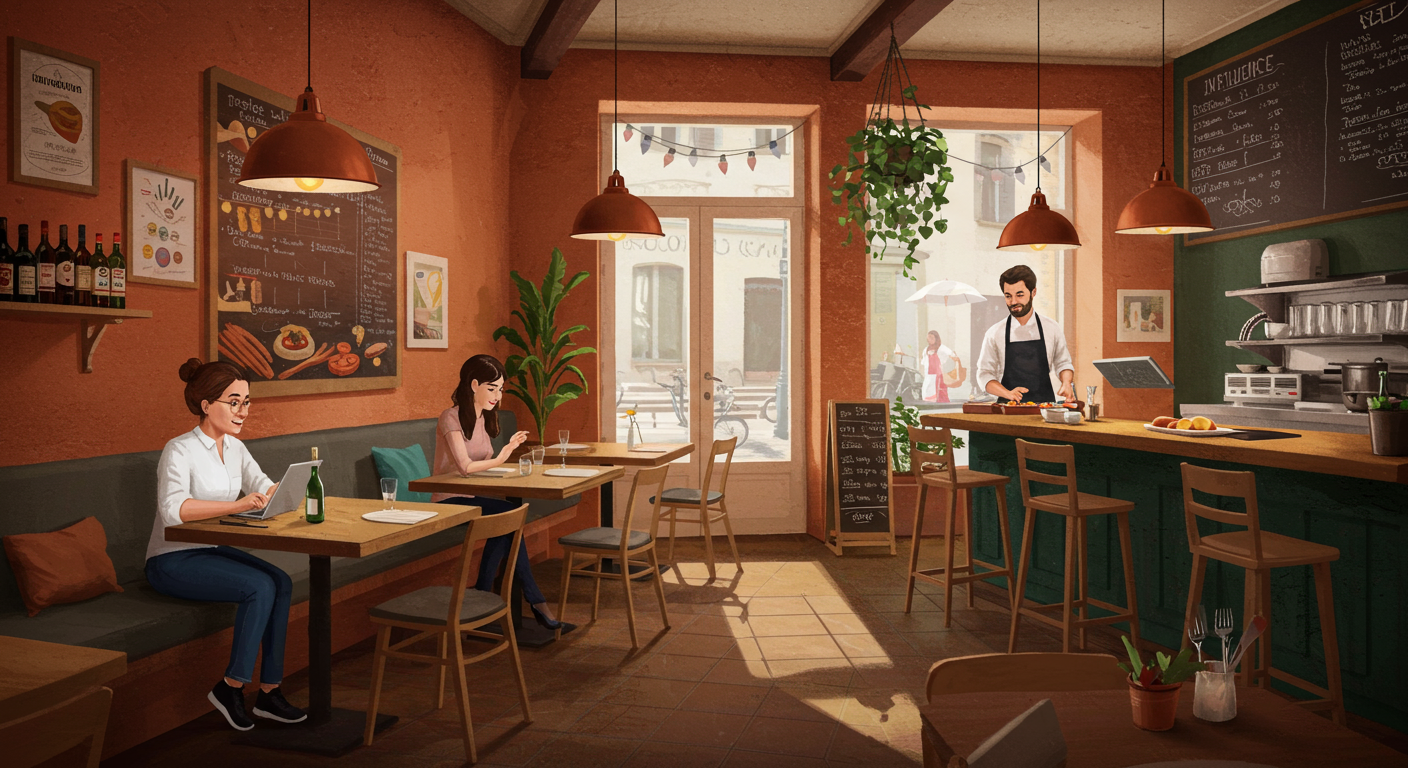
A customer walks through the door of your restaurant for the first time. You ask how they found you. Their answer: "I saw your dish on Instagram, on an account I follow." This scene plays out every week in thousands of restaurants. Word of mouth has moved to a new medium. It no longer travels solely through conversations between neighbours, but through stories, reels, and posts from content creators followed by local communities. For the independent restaurateur, understanding how to collaborate with a restaurant influencer is no longer something reserved for big chains — it's an accessible, measurable visibility lever that's often more cost-effective than a traditional advertising campaign.
But you need to know how to go about it. Because between profiles with thousands of followers who ask for free meals with no tangible return, and genuine partnerships that fill your dining room on a Tuesday evening, the gap is enormous. This article gives you the practical keys to use restaurant influencer marketing strategically, without sacrificing your margins or your time.
Why restaurant influencers have become essential for independents
Customer behaviour has changed profoundly in recent years. Before booking a table, the majority of diners check social media to see the dishes, the atmosphere, and the reviews. Retouched stock images no longer cut it — people want real, lived, recommended-by-someone-they-trust content.
That's exactly what a restaurant influencer delivers. Unlike traditional advertising, a content creator's recommendation works on the same principle as word of mouth — but on a much larger scale. A resident of Manchester who follows a local account dedicated to the best places to eat trusts that account far more than a sponsored ad in their feed.
Trust over reach
The trap would be to think only in terms of follower count. An account with 500,000 nationwide followers will bring you fewer customers than a local account followed by 5,000 people in your city — half of whom are keen restaurant-goers. The reason is simple: geographical relevance. Most of your customers come from within a 10- to 20-mile radius. An influencer based in Edinburgh won't send anyone to your brasserie in Bristol.
A format that matches today's expectations
The content created by influencers — short videos, stories with spontaneous reactions, real-life photos — is exactly what platform algorithms favour. Instagram, TikTok, and even Facebook prioritise authentic, engaging content. A reel showing a dish arriving at the table, filmed by an enthusiastic creator, naturally generates more visibility than a static photo posted by your own business account.
This isn't a judgement on the quality of your posts — it's how the algorithms work. Content coming from a third party is perceived as more objective and therefore receives more interactions.
How to identify the right local micro-influencer for your restaurant
The term local micro-influencer refers to a content creator with a community generally between 1,000 and 30,000 followers, rooted in a specific geographical area. This is the category that offers the best return for an independent restaurateur. Here's how to spot the right profiles.
Essential selection criteria
Before reaching out to anyone, evaluate each profile against these criteria:
- Geographical area: does the creator regularly post about venues in your city or region?
- Engagement rate: look at the ratio between the number of followers and interactions (likes, comments, shares). A rate between 3% and 8% is excellent for a micro-influencer. Below 1%, the community is probably inactive or bought.
- Quality of comments: comments like "I really want to go there", "where exactly is this?", "shall we go this weekend?" show a genuinely interested audience. Generic comments with emojis alone are a weak signal.
- Editorial consistency: does the creator post exclusively about food, or do they alternate between fashion, travel, beauty, and restaurants? The more specialised the profile, the more credible the recommendation.
- Visual quality: are the photos and videos polished? Do they reflect the atmosphere of venues similar to yours?
Where to find these profiles
Several practical methods work well:
- Search by local hashtags: type #RestaurantManchester, #BestEatsLondon, #FoodBrighton or the equivalent for your city. Identify the accounts that regularly appear in the results.
- Instagram geolocation: check the geotagged posts in your neighbourhood or city. Active creators naturally appear there.
- Your own followers: look at who already follows you and produces food content. An influencer who follows you organically will be more enthusiastic and authentic in their collaboration.
- Recommendations from fellow restaurateurs: talk to your peers. A neighbouring restaurateur (not a direct competitor) can recommend a creator they've had good results with.
- Specialist platforms: tools like Influence4You, Aspire, or Upfluence allow you to filter profiles by location, niche, and audience size.
Red flags you shouldn't ignore
Some profiles should be avoided:
- Purchased followers (sudden, unexplained spikes in follower count)
- No comment interaction despite thousands of likes
- Financial demands disproportionate to the size of the audience
- No disclosure on past partnerships (a serious creator clearly labels their collaborations)
- Frequent negative or controversial content — you don't want to associate your brand with controversies
Structuring an effective collaboration with a restaurant influencer
Once you've identified the right profile, the success of your partnership depends entirely on how you structure it. Improvisation is the enemy of a good return on investment.
Define your objectives first
What exactly are you looking to achieve? The answer determines the type of collaboration:
- Introduce your restaurant to a new local audience → go for a discovery post or reel
- Promote a new dish or a new menu → a live tasting story works very well
- Fill a quiet slot (Tuesday evening, lunchtime service) → a time-limited promo code shared by the influencer is remarkably effective
- Attract tourist clientele → collaborate with multilingual creators and consider offering a multilingual QR code menu for tourists that the influencer can mention in their content
Collaboration formats that work
Here are the most common formats, from simplest to most elaborate:
The discovery invitation (the most common) You invite the creator to come for dinner (for two people, typically). In return, they publish content — a story, post, or reel — about their experience. This is the most natural format and often the most authentic. Your actual cost is limited to the cost price of the meal, not the menu price.
Sponsored content You pay the creator for a dedicated post or video. Rates vary enormously: for a local micro-influencer with between 5,000 and 15,000 followers, expect between £80 and £350 (roughly $100–$450) on top of the invitation. This format gives you more control over the message (without dictating the content word for word — that would be counterproductive).
The private event You host a launch evening (new menu, reopening after refurbishment, seasonal menu) and invite several creators at once. The advantage: you multiply the posts on the same evening, creating a surge effect on social media. The drawback: the logistics are more demanding.
The recurring ambassador You establish a partnership over several months with a creator who returns regularly and documents their visits. This is the most powerful format for building lasting awareness, but it requires a genuine relationship of mutual trust.
The brief: essential but not stifling
Prepare a simple document with:
- Practical information (address, opening hours, parking, access)
- What you'd like highlighted (a signature dish, the atmosphere, value for money, the terrace, etc.)
- The hashtags and the account to tag
- What you do NOT want (for example, filming the kitchen if it's too small, or showing areas under renovation)
- The desired publication timeline
However, never write the text on the creator's behalf. Authenticity is the very reason influencer marketing works. Copy that's too polished or too promotional will be spotted immediately by the audience — and the effect will be nil, or even negative.
Budget and return on investment: what does it really cost?
This is the question every restaurateur asks. And rightly so: every penny counts when your net margin often hovers around a few percent of turnover.
Estimating the true cost of a collaboration
For a collaboration with a local micro-influencer, your investment breaks down as follows:
- Cost of the complimentary meal: calculate at cost price (raw ingredients + share of labour), not menu price. For a dinner for two, this often amounts to between £25 and £70 ($30–$90) in real cost depending on your positioning.
- Potential fee: from £0 (for a simple invitation) to a few hundred pounds for more elaborate content.
- Time spent: allow one to two hours to identify the profile, exchange messages, prepare the brief, and welcome the creator on the day.
In total, a typical collaboration with a local micro-influencer costs you between £25 and £450 ($30–$550). Compare that to the cost of an advert in a local magazine (often several hundred pounds for a single appearance) or a Google Ads campaign (where the cost per click in the restaurant sector can be significant).
Measuring results concretely
Don't settle for counting likes. Here's how to measure a tangible return:
- Dedicated promo code: create a specific code for each influencer (example: FOOD_JULIE). Every use at the till is directly traceable.
- Tracked booking link: if you use an online reservation system, create a unique link with a UTM parameter. You'll know exactly how many bookings came from that collaboration.
- Ask at the table: train your team to ask "How did you hear about us?" during the first week after the post goes live.
- Follower increase: note your follower count before and after the publication. A clear spike on the same day is a good indicator of visibility.
- Creator's screenshots: ask the creator to share their post statistics with you (views, profile clicks, saves). A professional creator does this as standard.
Profitability: a simple calculation
Imagine a collaboration that cost you £130 ($165) (meal + small fee). If it generates 10 new customers with an average spend of £30 ($38), that's £300 ($380) in revenue. Of that £300, your gross margin (excluding ingredient costs) is roughly £170 to £215 ($215–$270). You're already in profit — and those 10 customers may come back, bring others, and leave positive reviews online.
The true return on investment of influencer marketing is therefore measured over the medium term, not just the week following the post.
Mistakes that ruin an influencer strategy in the restaurant industry
Many restaurateurs have tried influencer marketing and come away disappointed. In the vast majority of cases, the failure isn't down to the principle itself but to its execution.
Mistake #1: choosing an influencer based solely on audience size
An account with 100,000 followers may look appealing, but if that audience is spread across the entire country, the local impact will be virtually zero. Worse, the cost of the collaboration will be much higher. Always prioritise geographical relevance over raw reach.
Mistake #2: preparing nothing for the day itself
The creator arrives, the front-of-house team has no idea who they are, they wait 40 minutes to be seated, and the dish arrives cold. The resulting post will be lukewarm — at best. Brief your team, reserve a good table, and make sure the service will be impeccable. This isn't special treatment — it's professional preparation.
Mistake #3: trying to control everything
Dictating the text, demanding approval before publication, forbidding any negative remarks… These reflexes kill authenticity. The creator knows their audience better than you do. Trust them — and if you've chosen your partner well, the result will be naturally positive.
Mistake #4: doing a one-off and drawing conclusions
A single collaboration won't transform your footfall. Restaurant influencer marketing works through accumulation. Three to four collaborations with different creators over two months create a repetition effect that anchors your restaurant in local audiences' minds.
Mistake #5: neglecting your own online presence
When a user sees an influencer's content and clicks on your profile, what do they find? If your Instagram account shows 12 posts from 2022, no booking link, and an empty bio, you immediately lose the benefit of the collaboration. Before any influencer campaign, make sure your digital shopfront is up to date. It's also the perfect time to set up an accessible, professional online menu — visitors who discover your restaurant through an influencer will immediately look for your menu.
Legal framework: what you need to know
Influencer marketing is regulated by law in many countries. Ignoring these rules exposes both you and the creator to penalties.
Advertising disclosure regulations
Countries across Europe, the US, and the UK have introduced regulations requiring transparency in influencer marketing. In the UK, the Advertising Standards Authority (ASA) enforces clear guidelines, while the US Federal Trade Commission (FTC) has similar rules. The key points for you:
- Mandatory transparency: any commercial collaboration must be clearly identified with labels such as "ad", "paid partnership", or "gifted" in the publication. This is primarily the creator's responsibility, but you should ensure they comply.
- Written agreement recommended: beyond a certain value, a written agreement is strongly advised. It protects both parties and clarifies expectations.
- No misleading practices: the creator cannot imply they discovered your restaurant by chance if it was an invitation. Transparency actually strengthens credibility — audiences are used to partnerships and accept them perfectly well when they're honest.
In practice, what should a written agreement include?
Even for a simple invitation, a clear exchange of messages (by email or DM) serving as an agreement is often sufficient. Specify:
- What is being offered (meal for X people, maximum amount)
- What is expected in return (number of stories, posts, timeline)
- Content usage rights (can you reshare the content on your own channels?)
- The mandatory commercial disclosure
Concrete action plan: launch your first influencer campaign in 30 days
Here's a realistic timeline for a restaurateur starting from scratch.
Week 1: Preparation
- Update your Instagram and/or TikTok profile (bio, link, hours, recent photos)
- Identify 10 potential local micro-influencers using the methods described above
- Evaluate each one against the selection criteria (area, engagement, consistency)
- Narrow your list down to 3–5 priority profiles
Week 2: Outreach
- Send a personalised message to each creator (NO generic copy-paste)
- Mention a specific piece of content they published that you enjoyed — this shows you've done your homework
- Clearly propose the collaboration format
- Be transparent about what you're offering and what you expect
Example message:
Hi [first name], I'm [your name], owner of [restaurant name] in [city]. I really enjoyed your post about [restaurant they visited] — the way you film dishes really makes you want to go. I'd love to invite you to try our menu, especially our [signature dish]. Would you be interested in a collaboration? I'm offering dinner for two in exchange for content on your account. Let me know what format works best for you.
Week 3: Hosting and collaboration
- Confirm the date and time slot (choose a service when the atmosphere is at its best)
- Brief your team: the creator's name, reserved table, attentive service
- Consider preparing a small extra touch (a complimentary signature dessert, a personalised gesture)
- Let the creator enjoy their experience — don't hover over their table every 5 minutes
Week 4: Follow-up and leverage
- Thank the creator after publication
- Reshare their content on your own channels (crediting them)
- Measure results (new followers, bookings, promo code usage)
- Reply to comments on the influencer's post — your responsiveness shows you're an engaged restaurateur
- Decide whether to renew the collaboration or reach out to the next profile on your list
Going further: combining influence with digital tools
Influencer marketing doesn't work in isolation. It fits into a broader digital strategy. The restaurateurs who get the most out of it are those who connect their influencer efforts to other levers.
For example, if an influencer showcases your menu, make sure it's easily viewable online. A multilingual QR code menu allows visitors — including international tourists discovering your restaurant through social media — to browse your dishes instantly.
Likewise, content generated by an influencer can be repurposed to improve your table turnover rate. How? By posting that content during your quiet periods to attract customers during off-peak hours.
Think about gift cards too. An influencer can easily promote a gift card offer for your restaurant — a format that works particularly well in the run-up to holidays and special occasions. To understand how to optimise this lever, read our article on gift card breakage rates.
Finally, good stock management is essential when a viral post brings a sudden influx of customers. There's nothing worse than having to refuse the signature dish the influencer highlighted because you've run out. To anticipate these spikes, discover how to optimise your stock without shortages.
Tools like ALaCarte.direct can help you professionalise your online presence — digital menu, QR code, simplified management — so that every visit generated by an influencer turns into a flawless customer experience, from online discovery right through to the bill.
Conclusion: take action this week
Restaurant influencer marketing is neither a luxury nor a passing trend. It's a concrete growth lever, suited to independent budgets, with measurable results. The local micro-influencer is your greatest ally for reaching a qualified, geographically relevant audience that's already interested in dining out.
Here's what you can do starting today:
- Tonight: open Instagram, type your city's hashtag + "food" or "restaurant", and note down 5 accounts that regularly post about local dining spots.
- Tomorrow: analyse their engagement rate and the quality of their comments. Eliminate those that don't meet your criteria.
- This week: send a personalised message to the profile that seems most relevant.
- This month: organise your first collaboration and measure the results.
You don't need a multinational marketing budget. You need a great dish, attentive service, and the right person to talk about it. The rest will follow.