ALaCarte.Direct
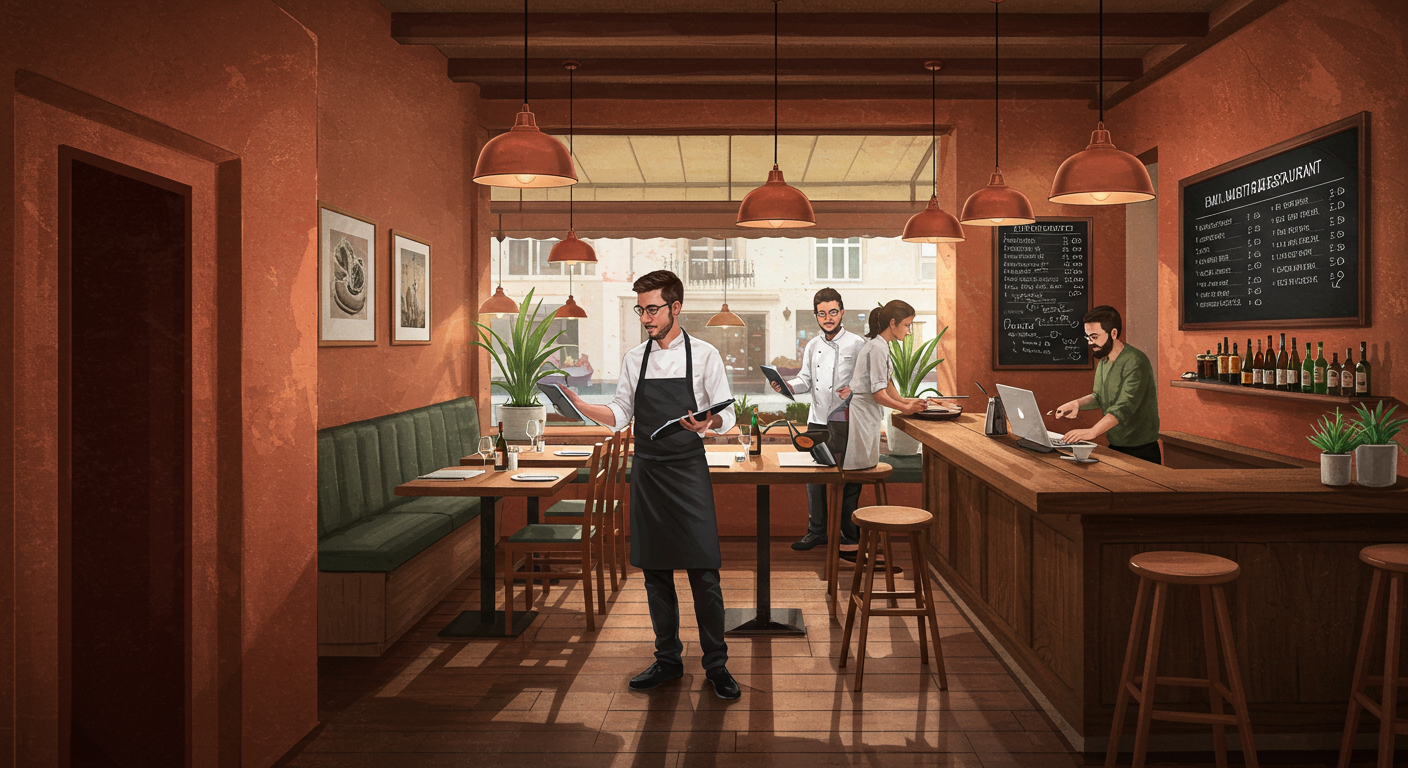
Your dining room is packed on Saturday evening. Forty covers, a warm atmosphere, plates going back empty. Yet among those forty guests, how many will return within the next three months? How many even remember the name of your restaurant two weeks later? That's where restaurant email marketing comes in: a direct, personal, and — crucially — controlled channel, unlike social media where the algorithm decides who sees what.
Email remains one of the few channels where you actually own your audience. Your subscriber list doesn't depend on any platform. No algorithm change slashing your visibility overnight. No account suspended without explanation. An email you send lands in your customer's inbox — and they, and they alone, decide whether to open it.
For an independent restaurateur, that's a decisive advantage. The challenge is knowing where to start, what to send, and how to automate the whole thing without burning the midnight oil.
Why restaurant email marketing remains an underused lever
Most independent restaurateurs focus their digital efforts on Instagram or Google. That's understandable — the results are visible, the likes gratifying. But these channels have a structural limitation: you control neither the reach nor the audience.
Restaurant email marketing works differently. You build a base of qualified contacts: people who've already dined with you, who know you, who enjoyed the experience. These are the warmest prospects that exist. Sending them an email is like slipping a personalised note into their pocket as they leave.
A negligible cost compared to other channels
Sending 500 emails per month costs between nothing and £25 depending on the tool you choose. Compare that with a local social media advertising campaign, where the same budget evaporates in two days. For a restaurateur watching every penny — and rightly so — the return on investment from email is hard to beat.
That doesn't mean email replaces other channels. It complements them. Your digital marketing strategy becomes more cohesive when email works in synergy with your social media and local presence.
A retention channel, not an acquisition one
An important distinction: email is not a tool for attracting new customers. It's a tool for keeping the ones you already have. The difference is fundamental. If you're trying to fill your dining room on a Tuesday evening, an email sent to 300 former customers from your neighbourhood will be far more effective than an advert seen by 5,000 strangers.
Customer retention is the lifeblood of the restaurant industry. Bringing a customer back costs infinitely less than winning a new one. And that's precisely what a well-crafted loyalty strategy enables: turning an occasional visitor into a regular.
Building your email list: methods that work in the restaurant industry
Before sending anything, you need recipients. And not just any recipients: contacts who've given their explicit consent (GDPR requires it) and who have a genuine connection with your establishment.
Collecting emails on-site
This is the most natural and effective collection point. The customer is in your restaurant, living the experience. Here are the practical methods:
- Wi-Fi with a captive portal: you offer free Wi-Fi, the customer signs up with their email. Simple, automatic, and the collection rate is high since the exchange of value is immediate.
- Digital receipts: at the point of payment, offer to send the receipt by email. The customer provides their address naturally.
- Online reservations: every booking = one email collected. Add an opt-in checkbox to your reservation form.
- In-venue competitions: a QR code on the table leading to a monthly prize draw (a complimentary meal, a bottle of wine). The customer signs up with their email.
- Digital loyalty cards: instead of the paper stamp card that inevitably ends up in the washing machine, a digital card that requires an email for activation.
Collecting emails online
Your website and social media channels are also valuable collection sources:
- A form on your website: not an aggressive pop-up, but a clear section in the footer or on the homepage. "Receive our news and exclusive offers."
- Your digital menu: if you use a QR code menu, it's an additional touchpoint to encourage sign-ups.
- Social media: a sign-up link in your Instagram bio, an occasional post inviting followers to join the newsletter.
Mistakes to avoid at all costs
- Buying email lists: illegal under GDPR, ineffective (high spam rates, no connection with your establishment), and potentially destructive to your sender reputation.
- Adding customers without their consent: even if they've booked with you, opt-in must be explicit for marketing communications.
- Offering no incentive: "Sign up for our newsletter" isn't enough. Offer something tangible: a complimentary aperitif on their next visit, early access to the new menu, an invitation to a private event.
The 5 automated emails every restaurant should set up
Automation is what makes restaurant email marketing viable for an independent operator. You set it up once, and the emails go out on their own, at the right time, to the right person.
1. The welcome email
This is the first email a new subscriber receives. It's read by a large majority of recipients — far more than any other email you'll ever send.
Recommended content:
- A sincere, personal thank-you
- A short introduction to your restaurant (your story, your cuisine, what makes you unique)
- The incentive promised at sign-up (that complimentary aperitif, the promo code)
- A link to your menu or digital menu
Practical example: "Welcome to the Bistrot des Halles family! As a thank-you, your next coffee is on us — simply show this email to our team. In the meantime, discover our seasonal menu here."
2. The post-visit email
Sent 24 to 48 hours after the customer's visit (if your reservation system allows it), this email has two objectives: say thank you and collect a review.
Recommended content:
- A personalised thank-you ("Thank you for joining us on Tuesday evening")
- An invitation to leave a Google review (with a direct link)
- An open question: "How was your experience?"
This email serves a dual purpose: it strengthens the relationship with the customer AND it feeds your Google reviews strategy, which is crucial for your local visibility.
3. The birthday email
If you collect your customers' birthdays (via the sign-up form or reservations), this email is a loyalty gem.
Recommended content:
- A warm, personal message
- An exclusive offer: complimentary dessert, a discount on a tasting menu, a glass of champagne
- A direct booking button
Birthday emails generate an exceptionally high engagement rate. It makes sense: it arrives at the right moment, it's personal, and the offer has strong perceived value.
4. The reactivation email
A customer hasn't visited in three months? Time to send a gentle nudge. No guilt-tripping, no "We miss you 😢" — just a good reason to come back.
Recommended content:
- A direct hook: "Our menu has changed since your last visit"
- The new attraction: a new signature dish, a seasonal menu, an upcoming event
- An incentive offer if needed: 10% off the next bill, a complimentary aperitif
5. The pre-event email
Hosting a special evening, a Valentine's Day menu, a Sunday brunch? Your subscribers should be the first to know.
Recommended content:
- The event, the date, the price
- What makes the event special (exclusive menu, guest chef, local producer)
- A priority booking link
This type of email is particularly effective if you host regular events. Your email list then becomes your primary channel for filling seats.
Writing emails your customers actually open
Automation isn't enough. If your emails are dull, they'll end up in the bin — or worse, in spam. Here are the copywriting principles that work specifically for a restaurant newsletter.
The subject line: your one chance to grab attention
The subject line decides everything. It's the first (and often the only) thing your customer reads. A few rules:
- Keep it short: 6 to 10 words maximum. On mobile, long subject lines get cut off.
- Be specific: say what's in the email. "Our new autumn menu has arrived" is better than "News from the restaurant".
- Enticing without being clickbait: avoid all caps, strings of exclamation marks, and excessive emojis. These trigger spam filters and irritate readers.
Examples of effective subject lines:
- "Your table is waiting this Thursday evening"
- "New menu: the asparagus is back"
- "Private invitation: wine evening on 15 March"
- "A complimentary dessert for your birthday"
Examples of subject lines to avoid:
- "🔥🔥🔥 INCREDIBLE OFFER NOT TO BE MISSED 🔥🔥🔥"
- "Newsletter no. 47 from Bistrot des Halles"
- "Our latest news"
The content: short, visual, actionable
A restaurant email is not a blog post. Aim for 150 to 250 words maximum. Your customers are reading on their phones, between appointments or on the commute.
Ideal structure:
- An opening line that hooks them in
- The core message (the news, the offer, the latest addition)
- A single, clear call to action (book, explore the menu, claim the offer)
The photo does half the work. A beautiful image of your signature dish, your dining room, your team in action — that's what sparks desire. Invest in a few professional photos of your dishes. They'll also serve your Instagram strategy.
Frequency: not too much, not too little
The question every restaurateur asks: how often should you send emails?
- Minimum: once a month. Any less and your subscribers forget you.
- Maximum: once a week. Beyond that, you'll saturate and unsubscribes will climb.
- Ideal for most restaurants: 2 to 3 times per month.
Adapt the frequency to your news cycle. If you change your menu every month, you naturally have content to share. If your menu is fixed, space things out and focus on events, behind-the-scenes glimpses, and occasional new offerings.
Choosing the right email marketing tool for your restaurant
The email marketing tool market is vast. Here are the criteria that matter specifically for an independent restaurateur.
Essential selection criteria
- Ease of use: you don't have a marketing department. The tool must be usable without training, with a visual drag-and-drop editor.
- Automation: the ability to create automatic sequences (welcome, birthday, reactivation) without manual intervention.
- Integration with your existing tools: your reservation software, your POS system, your website. The more data flows automatically, the less manual input you need.
- GDPR consent management: double opt-in, unsubscribe link, preference management — all of this should be built in natively.
- Affordable pricing: for a database of 500 to 2,000 contacts, most tools offer free plans or plans under £20/month.
The tools best suited to restaurateurs
Without recommending a single tool (every situation is different), here are the categories to consider:
- Accessible generalist platforms: Mailchimp, Brevo (formerly Sendinblue), Mailerlite. Good free tiers, intuitive interfaces, built-in automation.
- Tools integrated into your ecosystem: some reservation or POS solutions include an email module. The advantage: customer data is already there, no need to sync.
- All-in-one solutions: platforms like ALaCarte.direct that combine a digital menu, online presence, and communication tools, simplifying day-to-day management.
The best tool is the one you'll actually use. A Brevo account set up in 30 minutes with two active automations is worth more than a sophisticated system you never open.
Segmenting your database for more relevant emails
Sending the same email to your entire list is a common mistake. A customer who comes for a solo weekday lunch has different expectations from a family booking for Sunday midday.
Useful segments for a restaurant
- By visit frequency: regulars (more than 3 visits), occasionals (1 to 2 visits), inactive (no visit in 3+ months).
- By dining occasion: lunch customers vs dinner customers, weekday vs weekend.
- By acquisition channel: signed up via Wi-Fi, via a reservation, via the website.
- By spend level: high average spend vs standard average spend.
Practical examples of segmentation in action
- Your regulars receive an exclusive invitation to the new menu launch evening, two days before the public announcement. They feel valued.
- Your lunch customers receive a special "lunch set + complimentary coffee" offer on Tuesday, when your occupancy rate is lower.
- Your inactive customers receive the reactivation email with an incentive offer.
- Your high-spend customers receive invitations to premium events: food and wine pairing dinners, tasting menus, truffle evenings.
This approach requires a minimum of data, which brings us back to the importance of a CRM tailored to the restaurant industry. The more structured information you collect about your customers, the more relevant your emails become.
Measuring the results of your email campaigns
What doesn't get measured doesn't get improved. Here are the metrics to track for your restaurant email marketing.
Essential metrics
- Open rate: the percentage of recipients who open your email. For the restaurant industry, aim above 25%. If you're below 15%, your subject lines or sending frequency need attention.
- Click-through rate: the percentage of recipients who click a link in your email. A good rate is generally above 3%. Below that, your content or call to action lacks relevance.
- Unsubscribe rate: watch this closely. A spike in unsubscribes after a send signals a problem (frequency too high, irrelevant content, broken promise).
- Conversion rate: how many recipients booked, redeemed the offer, or actually walked through the door. This is the metric that truly matters.
How to interpret your results
Don't fixate on a single campaign. Look at trends over 3 to 6 months:
- Are your open rates rising? Your subject lines are improving and your audience is engaged.
- Are your click-through rates stagnating despite good open rates? Your content isn't convincing — rework your calls to action and the relevance of your offers.
- Are your unsubscribes increasing? Reduce the frequency or improve your segmentation.
A simple table in a spreadsheet is enough to track these metrics month by month. No need for a sophisticated analytics tool.
The most common restaurant email marketing mistakes
Having helped numerous restaurateurs with their digital transformation, certain mistakes come up time and again.
Mistake #1: Only talking about yourself
"We are pleased to inform you that our chef has created a new dish." Your customer doesn't care. What interests them is what it means for them. Reframe it: "Fresh morels arrived this morning — they're waiting for you in our risotto until Sunday."
Mistake #2: Sending emails without a call to action
Every email should have a clear objective and a single action button: book, discover the menu, claim the offer. An email without clear direction is a wasted email.
Mistake #3: Neglecting mobile
Over half your customers will read your email on their smartphone. If your email isn't responsive (text too small, images overflowing, buttons too close together), it will be deleted in a second. Every modern tool offers responsive templates — use them.
Mistake #4: Giving up too quickly
Email marketing is a marathon, not a sprint. Your first few sends won't fill your dining room overnight. Results accumulate over time, as your list grows and your emails improve. Consistency is key.
Mistake #5: Ignoring regulations
GDPR is not optional. Every email must contain a working unsubscribe link. Every contact must have given explicit consent. Your database must be properly managed and secured. Penalties can be severe. To stay up to date on your obligations, consult the 2026 restaurant regulations guide.
A concrete action plan to get started this week
Convinced of the value of restaurant email marketing but not sure where to begin? Here's a four-week plan.
Week 1: laying the foundations
- Choose an email marketing tool (Brevo or Mailchimp are good starting points).
- Create your account and set up your sender profile (restaurant name, professional email address).
- Import your existing contacts (customers who've already given consent via reservations, Wi-Fi, etc.).
Week 2: collection
- Set up at least two collection points: a form on your website and a QR code in your venue.
- Define your sign-up incentive (complimentary coffee, free aperitif, priority access).
- Brief your front-of-house team so they naturally mention the option to sign up.
Week 3: automation
- Set up your welcome email with the promised incentive.
- If your tool allows it, configure the birthday email.
- Create a reusable template with your brand identity (logo, colours, font).
Week 4: the first send
- Write and send your first newsletter: showcase your current menu, a piece of restaurant news, an exclusive offer for subscribers.
- Analyse the results 48 hours after sending.
- Schedule your next send in two weeks' time.
Conclusion: email, your direct line to your customers
Email marketing isn't reserved for large chains with ten-person marketing teams. It's an accessible, affordable, and remarkably effective tool for an independent restaurateur who wants to maintain the connection with customers between visits.
Key takeaways:
- Start small: a list of 50 contacts and one email per month is already a solid beginning.
- Automate the essentials: welcome, birthday, reactivation — three sequences working for you around the clock.
- Write for your customer, not for yourself: every email should answer the question "what's in it for them?".
- Measure and adjust: track your open and click-through rates, test different subject lines, refine your segments.
- Stay consistent: regularity matters more than perfection. A simple email sent every month is worth more than a polished newsletter sent once and then abandoned.
Your reservation book, your Wi-Fi, your digital menu — you already have the collection points. All that's missing is the decision to start. And the best time to send your first email is this week.