ALaCarte.Direct
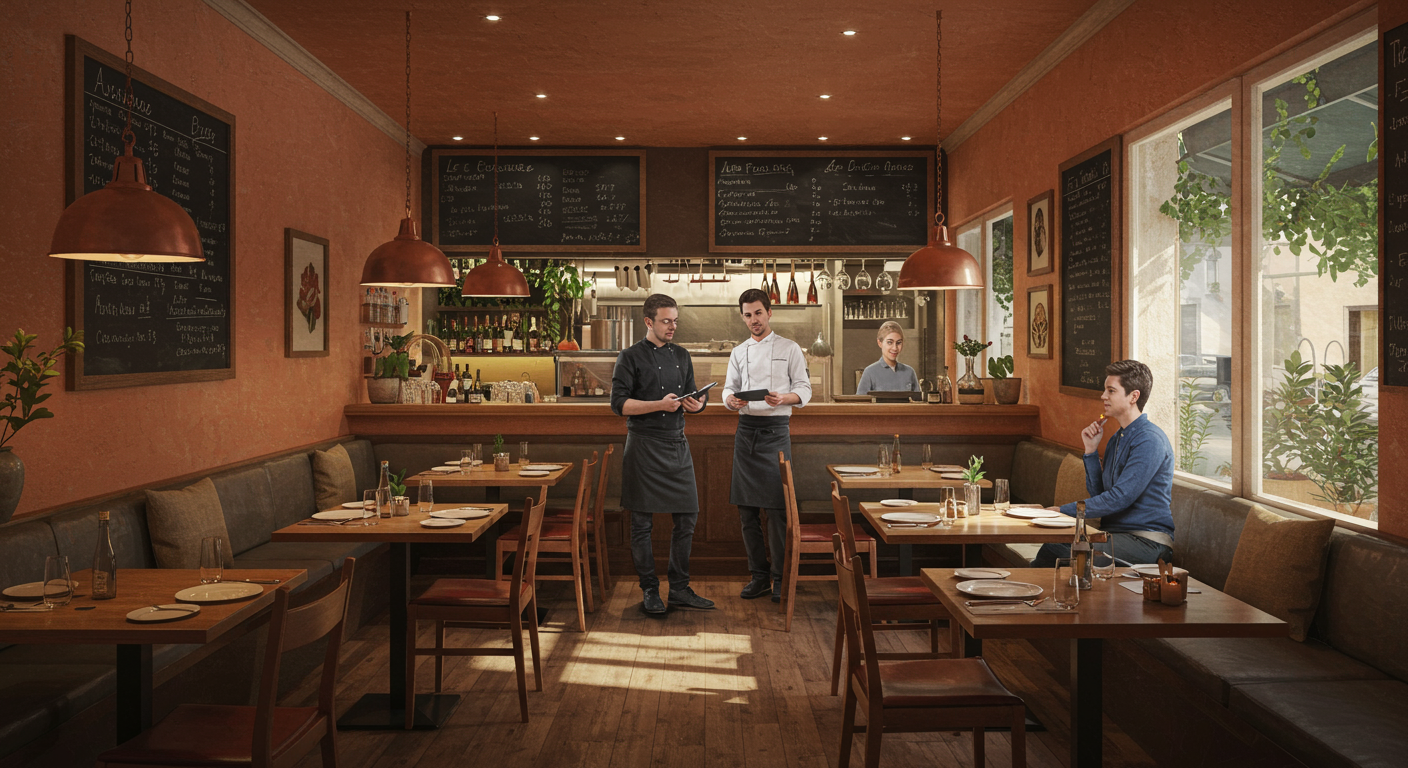
A water leak on a Sunday evening, a customer slipping on a wet floor, a kitchen fire: every independent restaurateur knows these scenarios are far from fictional. Yet many restaurant professionals only discover the gaps in their restaurant insurance cover at the worst possible moment — when disaster has already struck. Between strict legal requirements, essential cover, and optional but strongly recommended policies, it's easy to get lost. This guide breaks it down, contract by contract, so you can protect your establishment with full confidence.
Mandatory restaurant insurance: what the law requires
Before diving into the various policies, let's clarify one thing. There is no single contract called "mandatory restaurant insurance" that covers all risks. The legal obligation is spread across several distinct types of cover, each governed by specific regulations.
Public liability insurance (restaurant liability cover)
Public liability insurance is the foundation of protection for any restaurant. It covers bodily injury, property damage, or consequential losses caused to third parties — customers, suppliers, passers-by — in the course of your business operations.
In practice, public liability cover applies in situations such as:
- A customer suffering food poisoning after dining at your establishment
- A waiter spilling a hot dish on a guest
- A piece of glass found in a plate
- A customer falling in your dining area due to a slippery floor
- Damage caused to neighbouring premises by a water leak from your kitchen
Without public liability insurance, you would be personally responsible for the full cost of medical expenses, compensation, and any damages awarded. A single case of mass food poisoning can generate costs running into tens of thousands of pounds. For an independent restaurateur, that could mean bankruptcy.
Important: while public liability insurance is not technically mandatory for all professions, it is effectively essential for restaurateurs. Civil law requires every professional to compensate for harm caused to others. Operating without public liability cover means assuming that risk with your own funds.
Premises insurance: a near-universal contractual obligation
If you lease your commercial premises — as the majority of independent restaurateurs do — your commercial lease will require you to take out insurance covering tenant's risks. This obligation appears in virtually every commercial lease.
This cover protects against damage you might cause to the leased building: fire, water damage, explosion. The landlord has the right to terminate your lease if you cannot provide proof of valid insurance.
If you own your premises, building insurance is not legally required (unless it's a shared freehold or leasehold arrangement). However, it remains essential. Rebuilding a professional kitchen after a fire without insurance is an expense very few restaurateurs can absorb.
Structural warranty insurance: for major building works
If you carry out construction or major renovation work on your premises, the contractors involved must hold structural warranty insurance (known in France as assurance décennale, covering defects for 10 years). As the project owner, you must also take out latent defects insurance.
This obligation is often overlooked by restaurateurs who renovate their premises before opening. Always check your contractors' and tradespeople's warranty insurance certificates.
Mandatory insurance relating to your employees
As soon as you employ staff — which applies to virtually every restaurant — several additional insurance obligations come into play.
Group health insurance
In many countries, employers are required to provide some form of health cover for their employees. In the hospitality sector, collective agreements typically set out minimum levels of cover that you must provide.
The cost is usually shared: the employer covers at least 50% of the premium, with the remainder paid by the employee. In practice, industry-wide agreements in the hospitality sector specify particular levels of cover that you must comply with.
Key points to watch:
- All employees must be covered, including casual and fixed-term staff (subject to qualifying periods)
- Exemptions from membership are strictly regulated by law
- Failure to comply exposes you to penalties from tax authorities and liability for uncovered health costs
Group life and disability insurance
Hospitality industry collective agreements also require you to take out life and disability insurance for your employees — both managerial and non-managerial staff. This cover protects against serious risks: death, disability, and incapacity for work.
For managerial staff, the minimum contribution is typically set at 1.50% of the base salary bracket, fully funded by the employer. For non-managerial staff, conditions are defined by the industry-wide agreement.
Social security registration
This is not insurance in the strict sense, but it is a directly related obligation: every restaurant employer must register employees with the relevant social security authorities and pay the required contributions (health, workplace accidents, unemployment, pension). Workplace accident contributions vary according to your establishment's claims history.
Commercial combined insurance: not mandatory, but vital
Commercial combined insurance (also known as business insurance or multi-risk professional insurance) is not legally required. Yet no insurer specialising in the restaurant sector would advise you to go without it. It bundles several essential types of cover into a single policy.
What commercial combined insurance covers
- Fire and explosion: your kitchen concentrates heat sources, gas, extraction hoods, and grease. The fire risk is inherently higher than in other commercial premises
- Water damage: between the dishwashing area, toilets, cold rooms, and plumbing, there are multiple risk points
- Theft and vandalism: professional kitchen equipment, beverage stock (wine cellar in particular), till
- Equipment breakdown: a combi oven, a walk-in cold room, an ice machine — replacing any of these represents several thousands of pounds
- Business interruption: if a disaster forces you to close temporarily, this cover compensates for lost revenue and the fixed costs that keep running (rent, wages, loan repayments)
- Cold room stock: a prolonged power cut or cold room malfunction can destroy your entire stock of perishable goods
Business interruption: the cover nobody wants to use but everyone should have
Picture this: a fire breaks out in your kitchen on a Friday evening. The fire brigade arrives, the damage is extensive. Your commercial combined insurance covers the repairs to the premises and the replacement of equipment. But how long will the work take? Two months? Three?
During that period, you have zero revenue coming in. Yet the rent is still due, loan repayments keep falling, your staff are still under contract. Without business interruption cover, you must dip into your cash reserves — if you have any — to cover these costs.
Business interruption cover reimburses your gross margin for the duration of the restaurant's closure, up to a maximum period defined in the policy (typically 12 to 24 months). For an independent restaurateur turning over £350,000 a year, a three-month closure represents roughly £87,000 in lost gross revenue. This cover can literally save your business.
If you regularly manage events with large groups, such as receptions of 50 guests or more, the financial stakes in the event of a disaster are even higher. A single cancelled event due to damage can represent a significant loss.
Specialist insurance according to your activity
Beyond the common essentials, certain specific situations require or strongly recommend additional cover.
Alcohol licence and liability
If you hold an alcohol licence, you may be held liable for damage caused by an intoxicated customer to whom you served alcohol. Your public liability insurance must explicitly cover this risk. Check that your policy does not contain an exclusion clause on this point.
Terrace and outdoor space
Operating a terrace — whether on public or private land — extends your scope of liability. A parasol blown away by the wind, a customer tripping on a step, outdoor furniture damaged by a storm: all of these are incidents your insurance must cover. Check that your commercial combined policy includes outdoor areas within its scope of cover.
Business vehicles
If you use a vehicle for deliveries, procurement, or catering services, motor insurance is obviously mandatory. Beware: your personal car insurance does not cover business use. You must take out a specific commercial vehicle policy or declare business use to your insurer.
Delivery and takeaway
If you offer a delivery service — whether with your own drivers or through platforms — your liability extends to the quality and safety of the product delivered to the end customer. If your delivery drivers use mopeds or bicycles, specific insurance is mandatory.
Cyber insurance: an emerging risk
Your till system, your online booking platform, your multilingual QR code menu, your customer data: the digitalisation of your restaurant creates new vulnerabilities. A ransomware attack could paralyse your till system on New Year's Eve. Cyber insurance remains optional, but it is well worth considering, especially if you store payment data.
How much does restaurant insurance cost?
The cost of your insurance depends on many factors, so it is impossible to give a one-size-fits-all price. However, here are the main criteria that influence your premium.
Pricing factors
- The size of your premises: a 40-cover restaurant does not pay the same premium as a 200-seat establishment
- Your turnover: the higher it is, the greater the sum insured
- Location: a restaurant in central London or in a flood-risk zone will pay more
- Type of cooking: wood-fired or gas cooking increases fire risk compared to an all-electric kitchen
- Claims history: if you have made several claims in recent years, your premium will increase
- Equipment: the value of your professional equipment and stock (wine cellar in particular)
- Having a terrace: it extends the risk perimeter
- Age of electrical and gas installations: outdated installations increase the risk
Indicative price ranges
For a mid-sized independent restaurant (50–80 covers, in an urban area), here are the typical price ranges:
- Public liability only: a few hundred pounds per year
- Full commercial combined insurance (including public liability, fire, water damage, theft, equipment breakdown, business interruption): generally between £1,300 and £4,300 per year depending on the criteria above
- Group health insurance (employer's share): varies according to the number of employees and the level of cover chosen
- Group life and disability insurance: varies according to your payroll
These figures are indicative and can vary significantly. The only way to obtain an accurate quote is to request several estimates by providing the exact details of your establishment.
How to reduce costs without reducing cover
Several strategies can help you optimise your insurance budget:
- Compare at least three quotes from different providers at each renewal. Price differences for similar cover can reach 30 to 40%
- Bundle your policies with the same insurer (commercial combined + public liability + vehicle) to negotiate an overall rate
- Adjust your excess: a higher excess reduces the premium, but make sure you can afford that amount in the event of a claim
- Invest in prevention: serviced fire extinguishers, alarm system, CCTV, electrical upgrades. These measures reduce risk and therefore your premium
- Declare your activity accurately: an incorrect declaration could lead to a reduced payout in the event of a claim
How to choose your restaurant insurance: a step-by-step approach
Step 1: Take stock of your risks
Before contacting any insurer, list all the risks specific to your establishment:
- Type of cooking and equipment used
- Size of the premises and outdoor areas
- Number of employees and types of contracts
- Value of professional equipment
- Average value of stock (food and beverages)
- Services offered (dine-in, takeaway, delivery, catering)
- Whether you have an online booking system or loyalty programme holding customer data
Step 2: Identify your legal and contractual obligations
Re-read your commercial lease to check which insurance the landlord requires. Review the relevant hospitality industry agreements for your obligations towards employees. Check any requirements from your bank if you have an outstanding business loan (lenders often require insurance on financed equipment).
Step 3: Consult specialist insurers
Choose insurers or brokers who specialise in the restaurant and hospitality sector. They understand the specific risks of the trade and offer tailored policies. A generalist insurer may offer you an ill-fitting policy with problematic exclusions.
Always ask these questions:
- What is the maximum indemnity period for business interruption?
- Are perishable goods in cold storage covered in the event of a power failure?
- Is the terrace included in the scope of cover?
- What are the policy exclusions?
- What is the waiting period before a claim is paid?
- Does public liability cover food poisoning without restriction?
Step 4: Read the exclusions before you sign
This is the most important and most frequently overlooked point. Exclusions define what your insurance does not cover. In the restaurant sector, common exclusions include:
- Damage resulting from failure to maintain equipment
- Claims arising from non-compliance with food hygiene standards
- Damage caused by pests if no pest control contract is in place
- Stock losses if cold room temperatures are not monitored
A cheaper policy with more exclusions can turn out to be far more expensive in the event of a claim than a pricier policy with comprehensive cover.
The most common restaurant insurance mistakes
Mistake #1: Under-declaring the value of your equipment
To reduce their premium, some restaurateurs declare equipment values lower than reality. In the event of a claim, the insurer will apply the principle of average: if you declared £50,000 worth of equipment when it is actually worth £100,000, you will only be compensated for 50% of the loss.
Mistake #2: Failing to update your policy
Have you refurbished your kitchen, invested in a new oven, opened a terrace, hired three new staff? Every significant change must be reported to your insurer. A policy that no longer reflects the reality of your business is a policy that protects you poorly.
Mistake #3: Confusing insurance with prevention
Insurance compensates for the consequences of a disaster. It does not prevent one. Investing in prevention — staff training in fire safety, regular equipment maintenance, strict adherence to cold chain protocols — remains your best protection. Most insurers acknowledge this by offering preferential rates to well-equipped and well-maintained establishments.
If you are looking to optimise your stock management to avoid shortages, bear in mind that good stock management also helps reduce your insurance risks. Well-monitored stock means fewer losses and fewer claims related to improperly stored goods.
Mistake #4: Ignoring business interruption cover
This is the cover most often missing from small restaurant policies. Yet it is the one that makes the difference between a disaster you recover from and one that forces permanent closure.
Mistake #5: Not checking subcontractors' liability insurance
If you hire an external caterer for an event, a DJ, or an entertainment provider, check that they hold their own public liability insurance. If a subcontractor causes damage and is uninsured, liability can fall back on you.
What to do in the event of a claim: essential steps
When disaster strikes, every hour counts. Here is what to do.
In the first few hours
- Secure the premises: shut off gas and electricity if necessary, evacuate everyone present
- Call the emergency services if the situation demands it
- Document the damage: photos, videos, witness statements. This evidence will be essential for your claim
Within the first 48 hours (legal deadline)
- Report the claim to your insurer by recorded delivery or via the procedure set out in your policy. The typical legal deadline is 5 working days for a standard claim, 2 working days for theft
- Do not discard anything or carry out any repairs before the loss adjuster's visit, except for urgent protective measures (such as covering a damaged roof)
- Prepare a detailed list of the damage together with the corresponding purchase invoices
After the loss adjuster's visit
- Keep all correspondence with your insurer (letters, emails, call notes)
- Request a clear indemnification timeline
- If the proposed settlement seems insufficient, you can dispute it and request an independent assessment at your own expense
The link between insurance and regulatory compliance
Your insurance cover only works fully if your establishment complies with current regulations. A claim arising in a context of non-compliance can result in a refusal to pay out.
Compliance points your insurer will check in the event of a claim:
- Public premises regulations: accessibility, fire safety, emergency exits
- Food hygiene standards: compliance with your food safety management system, HACCP training for staff
- Technical installations: mandatory periodic inspections (electrical, gas, extraction hoods, fire extinguishers)
- Safety register: kept up to date with inspection and maintenance dates
For a deeper look at all the regulatory obligations that apply to your establishment and their impact on your insurance, see our complete guide to restaurant regulations.
Summary: your restaurant insurance checklist
To make sure you haven't overlooked anything, here is the complete list of insurance to check for your restaurant:
Mandatory:
- Public liability insurance
- Premises insurance (contractual lease obligation)
- Group health insurance for employees
- Group life and disability insurance (managerial and non-managerial staff as per industry agreements)
- Business vehicle insurance (if applicable)
- Latent defects insurance (in the event of building works)
Strongly recommended:
- Full commercial combined insurance
- Business interruption cover
- Equipment breakdown cover
- Cold room stock cover
- Legal expenses insurance
Depending on your activity:
- Cyber insurance (if you hold customer data, online bookings)
- Delivery-specific insurance
- Terrace and outdoor space cover
- Event insurance (if you host receptions, corporate events)
Conclusion: protect your restaurant now
Mandatory restaurant insurance is not just an administrative cost. It is the safety net that allows you to focus on what you do best — cooking, welcoming guests, and delivering great service — without every unexpected incident threatening your establishment's survival.
Here are three concrete actions to take this week:
-
Pull out all your current insurance policies and check that they cover all the risks listed in this guide. Pay particular attention to exclusions and business interruption cover.
-
Request at least three quotes from insurers or brokers specialising in the restaurant sector. Compare not only prices but, more importantly, the cover, exclusions, and excess levels. A tool like ALaCarte.direct can help you digitalise your menu and processes, but for your insurance, turn to industry professionals.
-
Update your declarations if your business has changed since you took out your policies: new equipment, a terrace, delivery service, new hires. An accurate declaration is the condition for full compensation.
Your restaurant is your investment, your expertise, your daily life. It deserves to be protected to match what it represents. Don't wait for disaster to strike before making sure you're covered — in every sense of the word.