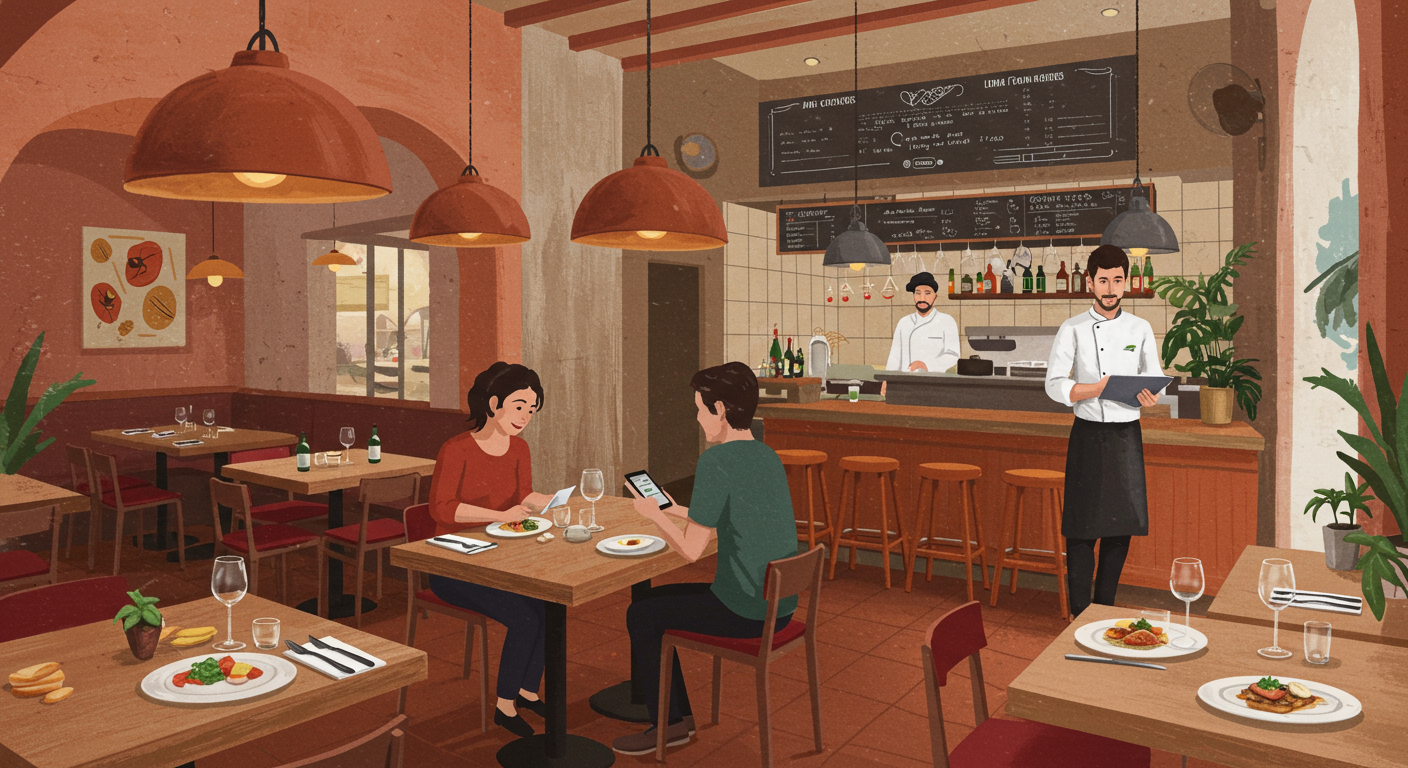
Your best salesperson isn't on your payroll. They're sitting in your dining room, finishing their dessert. That satisfied customer who recommends your restaurant to colleagues, friends, and family — they're the one generating your most profitable bookings. Word of mouth has always been the number one driver of footfall for independent restaurants. Yet most restaurateurs leave this mechanism to chance, never structuring or encouraging it. A restaurant referral programme transforms this natural dynamic into a genuine acquisition channel — measurable and repeatable. Here's how to set one up in your establishment.
Why a restaurant referral programme remains the most powerful acquisition lever
A personal recommendation has a power that advertising can never match: trust. When a friend tells you "you should try that little bistro on Elm Street, the food was absolutely incredible," you don't process the message as an advert. You take it as genuine advice. That's precisely what makes a restaurant referral programme so effective.
Customer acquisition cost in the restaurant industry
Attracting a new customer is expensive. Between social media advertising, booking platform commissions, promotional offers, and the time spent creating content, an independent restaurant's marketing budget spirals quickly. And the return on investment often remains difficult to measure.
Referrals work differently. You only pay when a new customer actually walks through your door. No upfront spend, no advertising budget wasted on impressions that don't convert. The reward you offer the referrer and the referred friend only kicks in upon an actual visit. It's a performance-based model — the healthiest there is for an independent operator.
Customers who stay longer
A customer acquired through recommendation doesn't arrive by chance. They come with a positive expectation, a favourable impression built by someone they trust. That context changes everything.
These customers tend to be less price-sensitive, more loyal, and more likely to recommend your establishment themselves. They arrive already "pre-qualified": they know what to expect, often know your speciality, and come for the right reasons. It's a virtuous circle that a restaurant referral programme can kickstart and sustain.
A mechanism tailor-made for independent restaurants
Unlike large chains that invest heavily in advertising, independent restaurateurs play on a different field: proximity, authenticity, and human connection. Referrals fit perfectly into this approach. They capitalise on what you already do best — creating an experience that people want to talk about.
The fundamentals of a successful restaurant referral programme
Before diving into the mechanics, lay the groundwork. A restaurant referral programme isn't simply "offer a coffee to anyone who brings friends." It requires careful thought about your goals, your margins, and your clientele.
Set clear objectives
What exactly are you looking for? Increased footfall on weekdays? Filling your Tuesday and Wednesday evening slots? Growing your lunchtime trade? Introducing a new menu?
Your objective shapes the programme's structure. If you want to fill quiet evenings with gift cards, for example, you can design a referral scheme where rewards are only valid on certain days. The more specific your objective, the more effective your programme will be.
Know your margins
This is the blind spot for many restaurateurs venturing into referrals. Offering a 20% discount to both the referrer and the referred friend is generous — but is it sustainable?
Do the maths first. Take your average spend per head, subtract your food costs and variable overheads. What's left is the margin you can work with. A referral reward should cost less than what you'd have spent acquiring that same customer through another channel.
A concrete example: if your average spend is £30 (around $38) and your gross margin is 70%, you have roughly £21 of margin to play with. Offering a complimentary aperitif (real cost: £2–3) to the referrer and a dessert (real cost: £2–4) to the referred friend remains very comfortable. You're acquiring a new customer for under £6 in real cost.
Choose between symmetrical and asymmetrical rewards
A symmetrical programme offers the same thing to both the referrer and the referred friend. It's simple, easy to communicate, and perceived as fair.
An asymmetrical programme differentiates the rewards. For example, the referrer receives a £10 voucher for their next visit, while the referred friend gets a complimentary aperitif on their first visit. This approach lets you fine-tune the incentives: an attractive reward to trigger the referred friend's first visit, and a return incentive for the referrer.
Both models work. The choice depends on your positioning and what resonates best with your clientele.
Step-by-step guide: setting up your restaurant referral programme
Let's get practical. Here are the seven steps to launching a working restaurant referral programme in your establishment.
Step 1: Design your referral offer
Define precisely what the referrer and the referred friend receive. Be specific — "a surprise" motivates no one. Here are concrete examples that work for independent restaurants:
- Complimentary house aperitif or cocktail — low food cost, high perceived value
- Complimentary dessert — same logic, and it encourages ordering a full meal
- Fixed monetary discount (£5, £10) off the bill — clearer than a percentage
- Complimentary starter or daily special for the referred friend on their first visit
- Gift card for a set amount redeemable on a future visit
Avoid percentage discounts, which feel less tangible to customers. "£10 off" speaks louder than "15% discount." Also avoid overly restrictive conditions (valid only on Tuesdays from 11:30 to 12:15, excluding drinks, excluding set menus, minimum 4 guests...). The simpler it is, the better it works.
Step 2: Create a simple tracking system
This is often where referral programmes fail: tracking. If you can't identify who referred whom, you can neither reward nor measure.
Several options depending on your level of digitalisation:
- Physical referral cards: the referrer receives cards with their name (or a unique code) to give to friends and family. The referred friend presents the card when booking or on arrival. Simple, tangible, effective.
- Unique referral code: each referring customer receives a code (their initials plus a number, for example). The referred friend mentions this code when booking.
- Digital tracking: if you have a customer management tool or a digital gift card system, you can automate the tracking. Platforms like ALaCarte.direct allow you to manage this kind of mechanism through traceable gift cards.
The key point: choose a system your team can manage without friction. If it's too complicated to handle during a busy service, it won't work.
Step 3: Train your team
Your front-of-house staff are the essential link in your programme. They need to know:
- What the programme is: the conditions, the rewards, the limitations
- When to mention it: ideally at the end of the meal, when presenting the bill, when the customer is satisfied
- How to mention it: not as a sales pitch, but as a natural piece of information ("By the way, if you enjoyed your meal, we have a referral programme...")
- How to handle a referred guest: greeting, verifying the referral, applying the reward
Hold a 15-minute briefing with the whole team. Give them the materials (cards, flyers). And above all, show them what's in it for them: more satisfied customers, more covers, potentially more tips.
Step 4: Prepare your communication materials
The programme should be visible without being intrusive. Here are the essential materials:
- Referral cards: business-card size, with the conditions summarised in one sentence, plus the code or space for the referrer's name
- Table tent or menu insert: a single line about the programme, visible during the meal
- Social media post: announce the launch, share regular reminders
- Mention on your website and digital menu: if you use a QR code menu, it's an ideal spot to inform customers
To maximise online visibility, consider tracking the performance of your digital menu to identify the best placements for promoting your programme.
Step 5: Launch with your best customers
Don't launch your referral programme with a big fanfare to everyone at once. Start with your regulars — those who already visit frequently and clearly enjoy your establishment.
These customers are your natural ambassadors. They know your food, your service, your atmosphere. Their recommendation will be the most credible and effective. Give them an exclusive first chance to refer.
In practice:
- Identify your top 20 to 30 customers (those who visit at least once a month)
- Hand them the referral cards or codes personally
- Explain the programme face to face
- Thank them for their loyalty — the referral programme is also a mark of recognition
Step 6: Automate what you can
A programme that relies entirely on memory and goodwill will eventually run out of steam. Automate the elements that can be:
- Automatic referral code delivery after a visit (via email or SMS if you collect contact details)
- Reminder to the referrer when their referred friend has visited (to trigger their reward)
- Tracking in a spreadsheet or simple CRM: date, referrer, referred friend, reward allocated, reward redeemed
Even a simple spreadsheet shared between the manager and front-of-house team is enough to get started. The important thing is not to lose track of referrals.
Step 7: Measure and adjust
From the very first month, track these indicators:
- Number of referrals initiated (cards or codes distributed)
- Conversion rate (referred friends who actually visited)
- Cost per acquisition (total value of rewards given out / number of new customers)
- Return rate of referred customers (how many come back without a referral after their first visit)
These figures will tell you whether your programme is working, whether you need to adjust the rewards, or whether you need to better train the team to talk about it.
Which rewards to choose for your restaurant referral programme
The choice of reward makes or breaks a referral programme. Too small, and nobody bothers to refer. Too generous, and you lose money. Here's how to find the right balance.
High perceived value, low actual cost
This is the secret to profitable programmes. The value perceived by the customer isn't proportional to your food cost. A signature cocktail priced at £12 on the menu might cost you just £2.50 to make. For the customer, it's a £12 gift. For you, it's a £2.50 acquisition cost.
The best rewards in this category:
- House cocktail or aperitif — excellent margin, feels like a real gift
- Signature dessert — same logic
- Extra amuse-bouche or palate cleanser — near-zero cost, "VIP experience" effect
- Complimentary coffee and petits fours — a classic, but always appreciated
- Wine upgrade (from the house glass to a premium cuvée) — minimal cost difference, premium feel
Monetary rewards
Fixed-amount vouchers or gift cards are more universal. They suit all customer profiles and are easy to understand. You can rely on a digital gift card system to manage these rewards seamlessly.
Be aware, however: a £10 discount costs you a real £10, whereas a complimentary dessert costs you £3. Reserve monetary rewards for more ambitious programmes where the average spend is high and margins are comfortable.
Experiential rewards
To stand out, offer rewards that money alone can't buy:
- Invitation to a private tasting evening after 3 referrals
- Meet the chef or a kitchen tour
- Chef's surprise tasting menu for the month's most active referrer
- Priority table or guaranteed weekend reservation
These rewards create a sense of belonging and privilege. They turn your best referrers into true ambassadors who are emotionally invested.
The tiered system
Rather than a single reward, create a progression:
- 1st referral: complimentary aperitif
- 3rd referral: dessert for two on the house
- 5th referral: full meal for two on the house
- 10th referral: private tasting evening with the chef
This system encourages repeat referrals. A referrer who has already brought two people will naturally be motivated to reach the third tier.
How to effectively promote your referral programme
Having a programme is great. Making it known is essential. Here are the key channels and moments to maximise participation.
The ideal moment: the end of the meal
The best time to mention your referral programme is when the customer is at peak satisfaction. Typically, that's between dessert and the bill. The customer has eaten well, they're in a good mood, they're in a positive frame of mind.
Train your team to spot the signals: compliments on the dishes, photos taken during the meal, positive comments between guests. That's the moment to slip in naturally: "Thank you so much, we're really glad you enjoyed it. By the way, if you'd like to introduce our restaurant to friends or family, we have a little referral programme..."
Social media
Announce your programme on social media, but don't settle for a single launch post. Plan regular reminders:
- Share testimonials from happy referrers (with their permission)
- Share programme stats ("Already 50 referrals this month — thank you!")
- Remind people of the available rewards
- Spotlight the "referrer of the month"
You can also leverage local influencer marketing to amplify your programme's reach to new audiences in your catchment area.
Email and SMS
If you collect your customers' contact details (when they book, via your website, through a loyalty programme), use these channels to promote your referral scheme.
A simple email, sent one week after their visit, is all it takes:
"Hello [First name], we hope you enjoyed your recent visit to [Restaurant name]. If you'd like to introduce our restaurant to friends or family, here's your referral code: [CODE]. Your friend will receive a complimentary aperitif, and you'll get a £10 voucher for your next visit. We look forward to seeing you again soon!"
Short, direct, with a clear incentive.
The bill and the receipt
This is an underused touchpoint. Add a line to your receipts or include a small flyer with the bill. The customer sees it at the moment they're reaching for their card — a moment when your restaurant is still fresh in their mind.
Your digital menu and website
If you use a multilingual QR code menu, add a dedicated section for the referral programme. It's a digital touchpoint that every customer consults during their meal.
On your website, create a dedicated page explaining the programme. This also allows customers to share the link directly with friends and family.
Mistakes that sabotage a restaurant referral programme
Many restaurateurs launch a referral programme with enthusiasm, only to watch it fizzle out within a few weeks. Here are the most common mistakes and how to avoid them.
Overly complex conditions
"Refer a friend, receive 15% off your next visit with a minimum spend of £35, excluding drinks, excluding set menus, valid Monday to Thursday, excluding bank holidays, within 30 days..." Nobody will read those conditions. And those who do won't bother referring.
The rule: if you can't explain your programme in one sentence, it's too complicated. "Refer a friend, you each get a complimentary aperitif" — there, understood in three seconds.
Not rewarding the referred friend
Some programmes only reward the referrer. That's a mistake. The referred friend needs an incentive to take the plunge. They don't know your restaurant yet; they're taking a "risk" by coming. Offer them something that lowers that barrier to entry.
Forgetting to follow up with referrers
You've handed out 100 referral cards. Three months later, 8 have been used. What happened? Probably nothing special: customers simply forgot. Without follow-up, even the most enthusiastic customers end up tucking the card away in a drawer.
Plan reminders: email, SMS, or simply a word from the team during the customer's next visit. "By the way, you had some referral cards last time — have you had a chance to share them with anyone?"
Ignoring feedback
Your programme isn't set in stone. Listen to feedback from your customers and your team. If the servers find the tracking system too cumbersome, simplify it. If customers find the reward unappealing, change it. A restaurant referral programme must evolve.
Not recognising your top referrers
A customer who brings you 5 new customers deserves more than an aperitif. Identify your best referrers and treat them like VIPs. A personalised thank-you from the chef, a special invitation, extra attention during their visits — these gestures strengthen engagement and encourage them to keep going.
Integrating referrals into your overall marketing strategy
A restaurant referral programme shouldn't operate in a silo. It fits into your broader marketing strategy and feeds off the other initiatives you're running.
Referrals and loyalty: two sides of the same coin
Referrals are an acquisition tool. Loyalty is a retention tool. The two complement each other perfectly. A loyal customer is your best potential referrer. A well-welcomed referred friend becomes a loyal customer, then a future referrer.
Build a coherent journey:
- The new customer arrives through a referral
- They have a positive experience
- They're enrolled in your loyalty programme
- They become a referrer themselves
Referrals and events
Events are natural referral accelerators. Themed evenings, seasonal menus, Sunday brunches, wine tastings — these are perfect occasions for inviting someone to discover your restaurant.
Offer special referral rewards tied to your events: "Refer a friend for our Beaujolais Nouveau evening, and you'll each receive a complimentary glass of champagne."
Referrals and online reviews
A customer who refers is a satisfied customer. They're also someone you can ask for an online review. The two approaches are complementary: referrals generate private word of mouth, online reviews generate public word of mouth.
Be careful not to overwhelm the customer with requests, though. A message along the lines of "If you enjoyed your experience, feel free to leave us a review and spread the word — we also have a referral programme..." combines both gently.
Concrete examples of programmes that work
Here are three referral programme models suited to different types of independent restaurants.
The neighbourhood bistro
Concept: physical referral cards, handed out at the end of the meal. Referrer reward: complimentary coffee and petits fours on their next visit. Referred friend reward: complimentary house aperitif on their first visit. Tracking: counterfoil book behind the bar; the server logs the referral. Expected outcome: low setup cost, well-suited to a local, regular clientele.
The fine dining restaurant
Concept: digital referral code sent by email after booking. Referrer reward: £20 voucher for their next visit. Referred friend reward: surprise amuse-bouche from the chef. Tracking: via the booking system, code linked to the customer profile. Tiers: after 3 referrals, invitation to a private tasting. After 5, tasting menu for two on the house.
The family pizzeria
Concept: "Bring Your Mates" programme. Referrer reward: free pizza of their choice after 3 referrals. Referred friend reward: complimentary dessert on presenting the code. Tracking: stamp card (one stamp per referred friend who visits). Promotion: poster in the window, mention on delivery boxes, regular Instagram posts.
These three examples show that there's no one-size-fits-all model. The best referral programme is the one that adapts to your type of establishment, your clientele, and your operational capacity.
Take action: your 2-week launch plan
You've read this guide. Now it's time to act. Here's a realistic 14-day launch plan.
Week 1 — Preparation:
- Day 1–2: Define your referrer/referred friend rewards based on your margins
- Day 3: Choose your tracking system (physical cards, codes, digital tool)
- Day 4: Get your materials printed or set up your digital tool
- Day 5: Brief your team — explain the programme, the rewards, and what to say
Week 2 — Launch:
- Day 8: Launch the programme with your top 20 customers, in person
- Day 9: Announce the programme on your social media channels
- Day 10: Add the information to your website and digital menu
- Day 12–14: Collect initial feedback from the team and customers, adjust as needed
Don't aim for perfection at launch. A simple programme that exists is infinitely better than a perfect programme that stays in a drawer. You'll improve it over time, based on real-world feedback.
A restaurant referral programme is one of the rare marketing levers that costs little, delivers a lot, and strengthens the relationship with your existing customers. Every satisfied customer who leaves your dining room is a potential ambassador. Give them the tools and the motivation to become one.