ALaCarte.Direct
You're a restaurateur wondering whether it's still worth investing in a website in 2026? This question, on the minds of thousands of restaurant professionals, deserves a nuanced, up-to-date answer. Because yes, the rules of the game have changed dramatically.
Ten years ago, the answer was simple: "Yes, absolutely — every restaurant must have its own website." Today, in 2026, that statement deserves to be seriously challenged. Not because a digital presence has become unnecessary — quite the opposite — but because the form that presence should take has fundamentally evolved.
In this article, we'll break down this question in depth, with hard data, real-world examples, and most importantly, give you the keys to making the best decision for your establishment.
The Radical Shift in Customer Behaviour (2020–2026)
How your customers search for a restaurant today
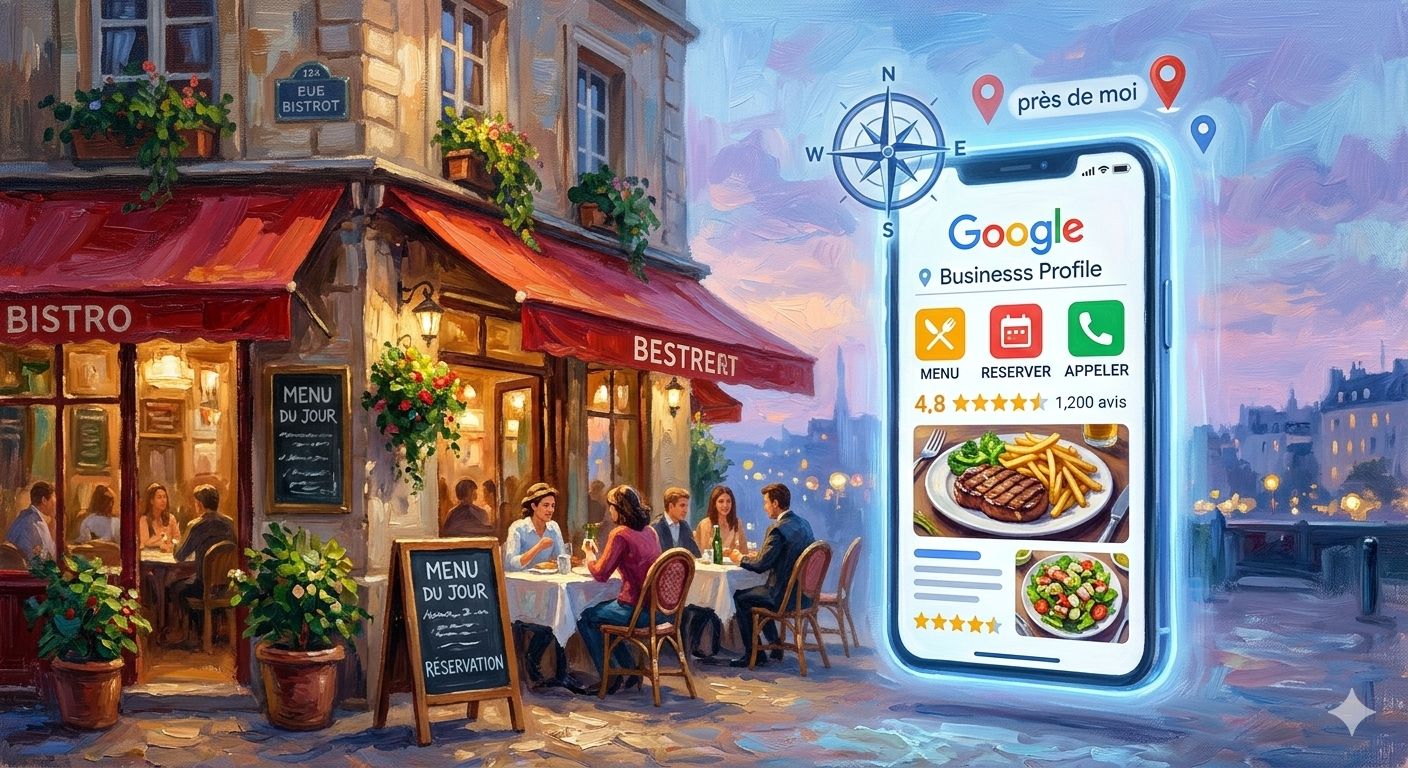
In 2026, the typical customer journey for choosing a restaurant has been completely upended. Here's what the latest behavioural studies show:
On mobile (83% of searches):
- Google search: "Italian restaurant near me" or "pizzeria open now"
- Quick scan of the top 3 results displayed on Google Maps
- Click on the Google Business Profile listing
- 15–30 second review: menu, reviews, photos, opening hours
- Decision: call or book directly
What's changed:
- ⏱️ Decision time: 2 minutes in 2026 vs 15 minutes in 2020
- 📱 Device: 83% mobile vs 52% in 2020
- 🔍 Entry point: Google Business Profile (68%) vs direct website (12%)
- 🎯 Expectations: instant information vs browsing through a site
The numbers that change everything
According to a 2025–2026 industry study surveying 5,000 restaurant customers:
- 72% of customers NEVER visit the restaurant's website before their first visit
- 91% check the Google Business Profile listing first
- Average time spent on a restaurant website: 47 seconds
- Top reason for visiting a site: viewing the menu (89%)
- Average bounce rate for a restaurant website: 64%
The conclusion is clear-cut: your customers aren't looking for a "website" — they're looking for quick answers to simple questions: What's on the menu? When are you open? Where exactly are you? How much does it cost?
What a Restaurant ACTUALLY Needs Online in 2026
Let's set websites aside for a moment and ask the real question: what are the essential digital needs of a modern restaurant?
1. Visibility on Google (local SEO)
This is the make-or-break factor. If you don't appear in the top 3 Google Maps results when someone searches for your type of cuisine in your area, you effectively don't exist.
What actually matters:
- An optimised, up-to-date Google Business Profile
- Regular customer reviews and responses to comments
- Professional-quality photos
- Structured data (Schema.org)
- Consistent NAP (Name, Address, Phone) across the web
The reality on the ground: A poorly optimised website can actually HURT your local SEO if it conflicts with your Google listing or displays contradictory information.
2. Instantly accessible menu
In 2026, 89% of customers want to see the menu BEFORE travelling or booking. It's the number one selection criterion.
What you need:
- A digital menu that's readable on smartphones
- Easy updates (ideally in real time)
- Photos of dishes (+40% conversion)
- Transparent pricing
- Clear allergen and ingredient information
Pitfall to avoid: A 5 MB PDF menu that takes 30 seconds to load on mobile = 80% bounce rate.
3. Crystal-clear practical information
Opening hours, address, phone number, ability to book. Full stop. Your customers aren't primarily looking for your story or the chef's biography (even if that's a nice bonus).
Simple test: If a customer on mobile can't find these 4 pieces of information within 5 seconds, you're losing bookings.
4. Flawless mobile experience
83% of restaurant searches happen on smartphones. If your digital presence isn't mobile-first, you're already out of the race.
2026 standards:
- Load time < 2 seconds
- Natively responsive design
- One-tap call and directions buttons
- No zooming needed to read the menu
5. Simple booking system
Ideally, let customers book directly from Google or your restaurant page, without navigating through 5 pages or filling in a 15-field form.
Benchmark: Restaurants with one-click booking see a 3.2x higher conversion rate compared to those that require a phone call.
The Real Problems with Traditional Websites in 2026
Now let's look at why a "classic" restaurant website often creates more problems than it solves.
1. Cost and complexity
Market reality:
- Agency-built brochure site: £1,700–£4,200 / $2,000–$5,000
- Annual maintenance: £250–£700 / $300–$800
- Redesign every 3 years: budget to spend all over again
- Build time: 3–8 weeks
For what? Often for 5–6 pages where 80% of the content will never be read by your customers.
2. Maintenance and updates
This is THE number one problem reported by restaurateurs:
- Menu changes: contact the agency, wait 3–5 days, pay £40–£85 / $50–$100
- Special opening hours: same hassle
- Photo of a new dish: complicated process
- Result: 68% of restaurant websites display outdated information
3. Disastrous technical performance
Tests carried out on 100 restaurant websites in 2025:
- Average load time: 6.3 seconds (vs the < 2 second standard)
- Average Google PageSpeed mobile score: 31/100
- Mobile compliance: only 42% truly responsive
- Technical error rate: 1 in 3 sites has broken links
Real impact: Every extra second of load time = -7% in conversions. A 6-second site therefore loses 42% of potential conversions compared to a 2-second site.
4. SEO that's often botched
Restaurant SEO is complex and frequently done poorly:
- No Schema.org markup (restaurant structured data)
- Conflicts with the Google Business Profile listing
- Duplicate content (same copy across 10 sites built by the same agency)
- No real local optimisation
- Unoptimised images (slowing load times)
Result: 73% of restaurant websites do NOT appear in the first 3 pages of Google for their natural local keywords.
5. Over-engineering for a simple need
Honest question: Do you really need:
- An "Our Story" page that 5% of visitors read?
- An "Our Philosophy" page?
- A blog you never update?
- A gallery of 50 full-page photos?
- A complex contact form when people would rather just call?
The truth: 92% of traffic on a restaurant website is concentrated on 2 pages: the menu page and the contact/hours page.
Modern Alternatives to the Traditional Website
1. The ultra-optimised restaurant page (recommended solution for 2026)
This is the approach emerging as the new standard: a single page, crystal-clear, perfectly optimised, containing EVERYTHING your customers need.
Features:
- 1 single page (vertical scroll)
- All essential information
- Integrated digital menu
- Ultra-fast loading (< 1 second)
- Perfect local SEO
- Self-service real-time updates
- 100% mobile-first
Concrete advantages:
| Criterion | Optimised page | Traditional website |
|---|---|---|
| Cost | £0 / $0 | £1,700–£4,200 / $2,000–$5,000 |
| Build time | 10 minutes | 4–8 weeks |
| Performance | Score 95/100 | Score 31/100 |
| Maintenance | Self-service | Agency-dependent |
| SEO | Automatically optimised | Manually managed |
| Conversion rate | +127% on average | Baseline |
2. Google Business Profile optimised to the max
Your Google listing is often more important than any website. In 2026, it's the first point of contact for 91% of your customers.
Optimisation checklist:
- ✅ Professional photos (minimum 20)
- ✅ Responses to ALL reviews (positive and negative)
- ✅ Weekly posts (offers, new dishes)
- ✅ Up-to-date menu
- ✅ Complete attributes (Wi-Fi, terrace, wheelchair accessible, etc.)
- ✅ Active Q&A
- ✅ Accurate hours (including bank holidays)
Impact: A fully optimised Google Business Profile can generate 3x more visits than a basic website.
3. Social media as a complementary shopfront
Instagram and Facebook don't replace a structured web presence, but they are essential complementary channels.
Smart usage:
- Instagram: visual storytelling, ambiance, signature dishes
- Facebook: events, customer reviews, practical information
- TikTok: reaching Gen Z (behind-the-scenes content, recipes)
Pitfall: Do NOT rely solely on social media as your main shopfront — you don't control the platform and Google SEO value is virtually zero.
4. Booking apps and aggregators
TheFork, OpenTable, Resy… These platforms have their place in your digital ecosystem, but use them with caution.
Advantages:
- Additional visibility
- Turnkey booking system
- Broader customer base
Disadvantages:
- Commissions (£1–£3 / $1–$3 per cover)
- Platform dependency
- No control over your customer relationship
Best practice: Use these platforms as a complement, but always have your own direct booking system (0% commission).
Use Cases: When a Full Website Is Still Justified
Let's be honest: there are situations where a multi-page website remains the right choice.
1. High-end fine dining restaurant
Profile:
- Average spend > £70 / $80 per person
- Exceptional dining experience (Michelin-starred)
- Strong storytelling around the chef
- International clientele
Why a website:
- The website is part of the experience (strong branding)
- Rich content: philosophy, history, provenance
- High-resolution artistic photography
- Multilingual support essential
- Regular blog/news updates
Example: A three-Michelin-star restaurant has every reason to have a sophisticated website that tells a story. The website becomes a marketing tool in its own right.
2. Restaurant chain
Profile:
- 5+ locations
- Need to manage multiple sites
- Complex loyalty programme
- Large-scale recruitment
Why a website:
- Centralised management of multiple restaurant listings
- Careers/recruitment section
- Dedicated pages per city
- Corporate blog
3. Restaurant with a significant catering/events offering
Profile:
- Catering represents >30% of revenue
- Organising weddings, corporate events
- Need for detailed quote request forms
Why a website:
- Dedicated pages per event type
- Portfolio of past events
- Quote request forms
- Event photo gallery
4. Restaurant with an online shop
Profile:
- Selling products (artisan foods, wines, preserves)
- Active e-commerce
- Nationwide delivery
Why a website:
- Online shop required
- E-commerce checkout flow
- Online stock management
Important: Even in these cases, the vast majority of restaurants (95%) do NOT have these specific needs.
The Optimal Solution for Your Restaurant in 2026
After this comprehensive analysis, what's the best strategy for the majority of restaurants in 2026?
The winning combination
1. Ultra-optimised restaurant page (the core of your presence)
- All essential information
- Up-to-date digital menu
- Perfect local SEO
- Free and self-managed
2. Fully optimised Google Business Profile
- Regular professional photos
- Responses to reviews
- Weekly posts
- Synchronised menu
3. Active Instagram (visual storytelling)
- 3–5 posts/week
- Daily Stories
- Ambiance and behind the scenes
4. Direct booking system
- 0% commission
- Integrated into your restaurant page
- Automatic confirmation
Realistic budget comparison
| Solution | Initial cost | Annual cost | Management time/month |
|---|---|---|---|
| Agency website | £2,100–£4,200 / $2,500–$5,000 | £420–£850 / $500–$1,000 | 2–3h |
| Optimised page + Google | £0 / $0 | £0 / $0 | 30min |
| Recommended combo | £0 / $0 | £0–£170 / $0–$200 | 1–2h |
ROI: The time and money saved can be reinvested in what truly matters: your food, your service, your ingredients.
The 3 questions to ask yourself
Before deciding whether you need a full website, ask yourself these questions:
1. "Do my customers need more than a menu + opening hours + location?"
- If no → An optimised restaurant page is enough
- If yes → Analyse those specific needs
2. "Do I have the time and resources to keep a website up to date?"
- If no → You'll end up with an outdated site = counterproductive
- If yes → Make sure you have a smooth update process in place
3. "Does my premium positioning justify a website as a branding tool?"
- If no → Budget better spent elsewhere
- If yes → Invest in a genuinely high-quality site (not a template)
Conclusion: Digital Presence Is Evolving, Not Losing Its Importance
No, a restaurant no longer automatically needs a traditional website in 2026. But it ABSOLUTELY needs a strong, clear, fast, and optimised digital presence.
The distinction is crucial: it's not that being online is becoming unnecessary (quite the opposite) — it's the FORM that presence should take that's changing dramatically.
What still holds true in 2026
- ✅ Your customers search for your restaurant online
- ✅ 70% of your new customers come through digital channels
- ✅ Local SEO is critical
- ✅ First impressions matter enormously
- ✅ Transparency (menu, prices) is expected
What's changed in 2026
- ❌ Your customers no longer want to "visit a website"
- ❌ They no longer read 10 pages of content
- ❌ They no longer have the patience to wait 6 seconds for a page to load
- ❌ They no longer distinguish between a "website" and a "Google page"
- ❌ They want instant answers, not a web experience
The immediate action to take
Today, try this test:
- Take out your smartphone
- Search for your restaurant on Google (without being logged in)
- Time how long it takes to find: menu, opening hours, phone number
- If it takes more than 10 seconds → you're losing customers
If you DON'T yet have a digital presence:
- → Create an optimised restaurant page (free, 10 minutes)
- → Do NOT invest £2,500 / $3,000 in a traditional website
- → You can always scale up later if a genuine need arises
If you ALREADY have a website:
- → Honestly audit it: is it actually useful?
- → Is it up to date? Performant? Generating bookings?
- → If not: migrate to a simpler, more effective solution
The bottom line
In 2026, a restaurant's digital success is no longer measured by the number of pages on its website, but by how quickly a hungry customer can find your menu, your opening hours, and decide to walk through your door.
Simplicity, clarity, and performance have replaced complexity and the "all-in-one" approach. And that's excellent news for restaurateurs who can finally focus on what matters most: their food.
Take action now
Create your professional restaurant page in 10 minutes, for free, with zero technical knowledge required.
→ Create my free restaurant pageJoin over 1,000 restaurateurs who've chosen simplicity and effectiveness.