ALaCarte.Direct
31 May is fast approaching, and with it one of the most profitable services of the year for the restaurant industry. Mother's Day at a restaurant is a Sunday when families are willing to spend more, book earlier, and choose a venue they wouldn't normally visit the rest of the year. Yet many independent restaurateurs simply open their doors as if it were any other Sunday — and miss out on significant revenue.
The problem isn't a lack of demand. It's a lack of preparation. Between a special menu thrown together at the last minute, marketing launched three days beforehand, and poorly anticipated bookings, Mother's Day service often turns into a race against the clock. The result: empty tables, the same average spend as any other Sunday, and a missed opportunity to win over new loyal customers.
Here are 10 practical, field-tested ideas to turn your 2026 Mother's Day service into a fully booked, sold-out event.
1. Create a 2026 Mother's Day menu that's worth the trip
A special menu isn't simply a copy-paste of your regular offering with an extra dessert tacked on. It's a culinary proposition designed for the occasion — and above all, it's a reason to book.
Structure the menu as an experience
Offer a 4 or 5-course prix fixe menu with an evocative name. Avoid the generic "Mother's Day Menu at £40" and go for something that tells a story: "The May Garden Menu" or "Five Courses for Her".
A few principles for composing this menu:
- A complimentary amuse-bouche on arrival, even something simple (a verrine, a savoury financier). It creates the feeling of "we were expected".
- Two choices per course, no more. This simplifies your mise en place while still giving guests some freedom.
- A signature dessert created for the occasion. It's the most photographed and shared dish on social media — invest in it.
- A complete vegetarian option, not simply removing the animal protein. Family tables increasingly include a variety of dietary requirements.
Set the right price
The average spend for a Mother's Day meal is typically higher than a regular Sunday. Families expect this. Position your menu between 20% and 35% above your usual average spend, making sure the perceived value matches the price.
Make sure to work out your food cost methodically so that this special menu remains profitable despite higher-quality ingredients.
2. Open bookings three weeks before the big day
Mother's Day at a restaurant is won before 31 May, not on the day itself. Families organising a celebratory lunch typically book 10 to 20 days in advance for this kind of occasion. If you only open bookings the Monday before, you're handing the advantage to your competitors.
The ideal timeline
- D-21 (10 May): announce the menu and open bookings. Post on your social media channels and send an email to your customer database.
- D-14 (17 May): follow up with a visual of the signature dessert or a menu preview. Add a sense of urgency ("only 8 tables remaining").
- D-7 (24 May): final reminder, targeting last-minute bookers. Mention gift cards as an alternative for those who couldn't secure a table.
- D-1 (30 May): confirm all reservations by text or phone call. This is the moment to anticipate no-shows.
Manage overbooking intelligently
If your typical Sunday no-show rate is 10 to 15%, adjust your booking capacity slightly. But have a Plan B ready: an extra table, service in two sittings, or a staggered 1:30 pm slot to absorb overflow.
3. Offer Mother's Day gift cards in advance
Not every child can be there in person on 31 May. Some live far away, others have scheduling conflicts. A Mother's Day restaurant gift card is the perfect solution — and it's a revenue driver that's often underused.
Why gift cards work so well for this occasion
- They solve the "I don't know what to buy" problem for someone who already has everything.
- They generate footfall beyond the day itself: Mum will come to use her card another day, often with company.
- The non-redemption rate (or "breakage") generates pure margin for your business.
How to promote them
Create a dedicated visual — "Treat her to dinner" — and share it across your social channels and by email from 5 May onwards. Solutions like ALaCarte.direct let you sell gift cards online, redeemable directly at your restaurant, with no complex logistics. If you'd like to go further, check out our complete guide to restaurant gift cards or discover 15 promotional ideas for your gift cards.
Offer preset amounts (£45, £65, £85) and a custom amount option. Add the ability to personalise the message — this small detail transforms a transaction into a thoughtful gesture.
4. Elevate the décor without blowing the budget
Mother's Day at a restaurant is also about atmosphere. Families are looking for a setting that marks the occasion, not just another regular service. But elevating the décor doesn't mean spending hundreds on a florist.
Simple, effective touches
- A small bouquet on each table: seasonal flowers bought in bulk from a wholesaler or market. Peonies, garden roses, ranunculus — the unit cost stays under £4–5 per table.
- A special placemat printed for the occasion, with the day's menu on the reverse. Cost: a few pence per unit with digital printing.
- A photo-friendly feature at the entrance or in the dining room: a frame reading "Happy Mother's Day", a simple flower wall, or even a hand-lettered chalkboard. Customers photograph it, share it, and give you free advertising.
What to avoid
Metallic balloons, confetti (a cleaning nightmare), and visual overload. Stay true to your venue's identity. A neighbourhood bistrot that transforms itself into a tearoom loses credibility.
5. Give every mum a small gift
A simple, low-cost gesture that makes all the difference in terms of memorability and word-of-mouth.
Gift ideas under £3 per cover
- A single rose presented at dessert.
- A sachet of artisan tea or locally sourced herbal infusion, beautifully wrapped.
- A homemade biscuit in a small kraft bag with a handwritten note.
- A 10% discount voucher for a future visit, valid for one month. It's a gift that drives return visits.
- A small card with a quote and your restaurant's logo — a subtle brand reminder.
The impact is wildly disproportionate to the cost. This gesture will be mentioned in Google reviews and on social media. Speaking of which, if you'd like to boost your online reviews, see how to get over 50 Google reviews per month.
6. Adapt your service for family tables
Mother's Day service isn't a standard service. Tables are larger (4 to 8 covers on average), multigenerational, and expectations are different.
Anticipate specific needs
- High chairs and children's cutlery: check your stock before the day. Nothing is worse than a family of six with two children and no suitable equipment.
- A simple children's menu: pasta, chicken, ice cream. Don't overcomplicate it. Price it reasonably (£7–10) — parents will appreciate it.
- The pace of service: family tables take longer. Allow a minimum of 2-hour slots and brief your team accordingly.
- Accessibility: grandparents, pushchairs, wheelchairs. Make sure your customer journey is smooth from the entrance to the table.
Brief the team
Hold a specific briefing the evening before or the morning of service. Key points to cover:
- The menu run-through (timing, courses)
- The gift gesture (who gives it, and when)
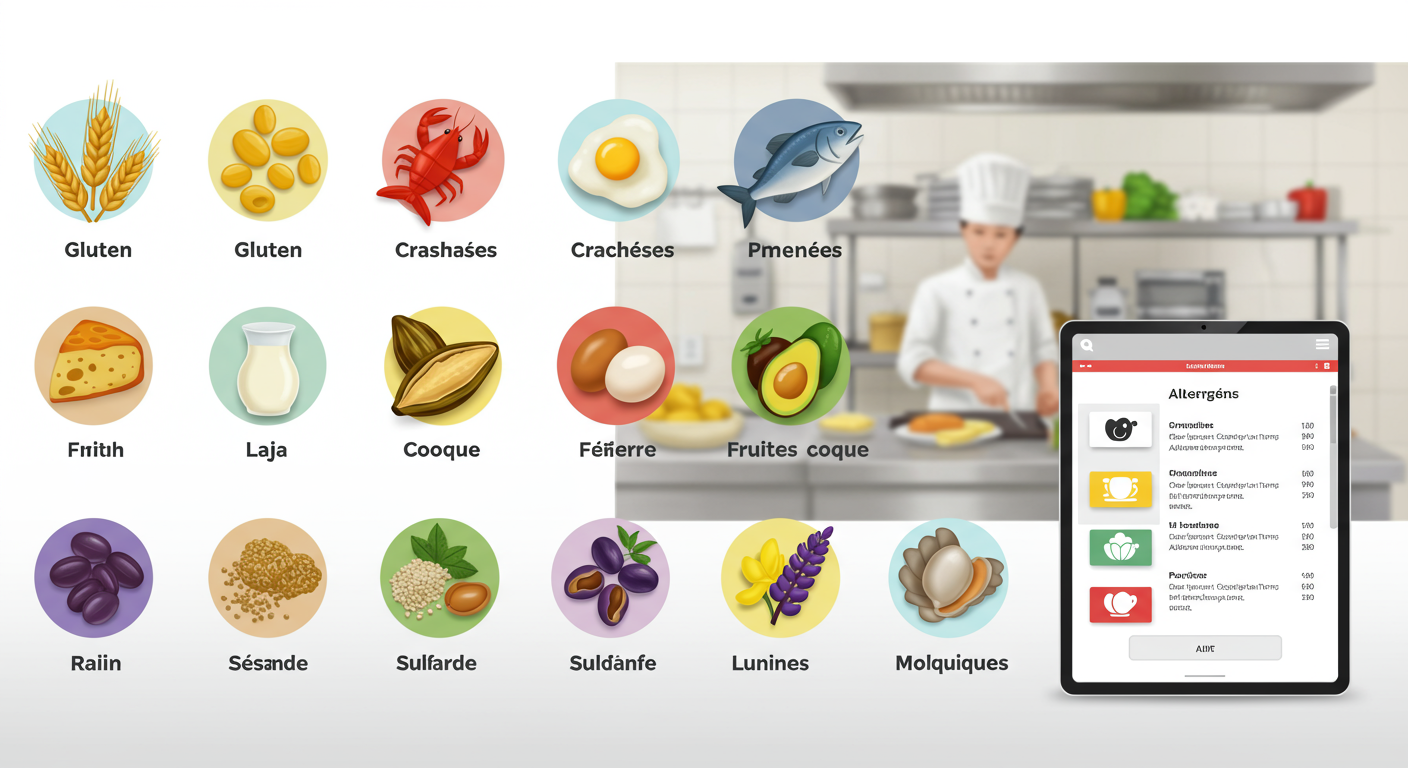
- Allergen management (family meals multiply special requests)
- The tone: warm, attentive, without being overly familiar
7. Get active on social media now
Your Mother's Day restaurant visibility is built on Instagram, Facebook, and Google. And the optimal communication window is now — not the last week of May.
The minimum content plan
- Week of 5 May: announce the special menu with an appetising visual. Story + post.
- Week of 12 May: behind-the-scenes prep (testing the dessert, choosing the flowers, setting up). The "behind the scenes" format drives engagement.
- Week of 19 May: a testimonial or photo from a previous Mother's Day (with permission). Social proof.
- Week of 26 May: final reminder, urgency ("last tables available"), direct link to bookings or gift cards.
To take your strategy further, our article on Instagram strategy that actually works for restaurants breaks down the formats and frequencies that deliver results.
Common mistakes
- Posting once, three days before. The algorithm won't give you visibility.
- Using stock photos. Your real dishes, even shot on a smartphone, are far more convincing.
- Forgetting the call-to-action. Every post should tell people how to book or buy a gift card.
8. Activate your email and SMS database
If you have a customer database — even a modest one — now is the time to use it. A targeted email sent to your list has a far higher conversion rate than a social media post, because it reaches people who already know you.
Structure of an effective email
- Subject line: direct and emotional. "Mother's Day: book her favourite table" works better than "May 2026 Newsletter".
- Body: an image of the menu or dessert, 3 lines of text, a "Book Now" button and an "Give a Gift Card" button.
- Timing: send two emails. The first three weeks before (announcement), the second one week before (reminder).
If you don't yet have an email strategy in place, this might be the right time to discover how to automate your restaurant email marketing.
SMS: the secret weapon for filling tables
SMS has an exceptionally high open rate. A short message sent on Monday 25 May to your customer base can be enough to fill your remaining tables:
"Mother's Day at [Restaurant Name] on 31 May — 5-course menu at £XX. Last places: [booking link]. Reply STOP to unsubscribe."
Important: comply with data protection regulations (GDPR). Only message customers who have given their consent.
9. Offer service in two sittings
If your capacity is limited (fewer than 40 covers), a single sitting won't allow you to maximise your revenue. The solution: offer two services.
How to organise a double sitting
- First sitting: 11:30 am – 1:30 pm. Position it as the "Mother's Day brunch" or "family lunch".
- Second sitting: 2:00 pm – 4:00 pm. Present it as the "gourmet lunch", more relaxed, with a sharing dessert and complimentary coffee.
The keys to making it work
- Clearly communicate the time slots at the point of booking.
- Allow 30 minutes between the two sittings for table turnover.
- Adapt the menu if needed: the first sitting can be slightly more substantial, the second lighter with a "late brunch" feel.
- Reinforce your front-of-house team. Two sittings with your usual staffing level guarantees a subpar service and negative reviews.
10. Extend the event beyond 31 May
Mother's Day isn't limited to a single Sunday. Many families aren't available on the day itself. And some mums would rather avoid the Sunday rush and enjoy a quieter moment during the week.
The "Mothers' Week" offer
Extend your special menu from Monday 1 June to Sunday 7 June. Promote it with a simple message: "Not available on 31 May? Treat her to Mothers' Week — our special menu available until 7 June."
This strategy has several advantages:
- Spread the workload and production across multiple days.
- Capture latecomers who didn't book in time.
- Maximise your return on ingredients purchased specifically for the menu.
- Fill your weekday evenings, which are traditionally quieter.
Capitalise on the aftermath
On Monday 1 June, publish a visual recap of your Mother's Day: photos of the dining room, the dessert, happy families (with permission). It's content for your social channels, but above all it's the social proof that will fuel your next events.
Also consider sending a thank-you email to your 31 May guests, with a personalised note and an invitation to return. Mother's Day can be the starting point of a lasting relationship.
Summary checklist: your 2026 Mother's Day action plan
Here are the actions to launch in order, week by week:
Right now (early May):
- Finalise the special menu and set the price
- Create the menu visual (photo or simple design)
- Put Mother's Day gift cards on sale online
- Order flowers and small gifts
Week of 10 May:
- Open bookings
- Publish the first announcement on social media
- Send the first email to your customer database
Week of 19 May:
- Publish behind-the-scenes content
- Send a follow-up email to customers who didn't open the first one
- Check stock of high chairs, children's cutlery, and décor items
Week of 26 May:
- Final reminder on social media and SMS
- Confirm all reservations (phone or text)
- Brief the team: menu, timing, gift gesture, allergen management
- Prepare the décor setup
31 May:
- Execute the plan. Enjoy the service.
- Take photos for post-event content.
After 31 May:
- Publish the visual recap
- Send a thank-you email
- Analyse the results: occupancy rate, average spend, gift card sales
Mother's Day at a restaurant isn't an event you prepare the night before. It's a commercial lever that, when executed well, fills your dining room, raises your average spend, and introduces you to new customers. The 10 actions outlined here don't require a hefty marketing budget — they require forward planning, rigour, and a genuine focus on the guest experience.
You still have four weeks ahead of you. That's more than enough time to put together a special menu, open bookings, launch your gift cards, and communicate effectively. The most important thing: start today. Not tomorrow, not next week. Every day you delay is a booking that goes to the competitor across the road.