ALaCarte.Direct
Laminated paper menus are a thing of the past. In 2026, over 60% of restaurants in France already offer a digital menu accessible via QR code. And this isn't just a trend — it's a fundamental shift in the customer experience and day-to-day operations.
You're a restaurateur wondering whether a digital menu is right for you? Spoiler: yes. Whether you run a brasserie, a food truck, or a fine dining restaurant, a digital menu is no longer optional in 2026 — it's the standard.
Here are 10 concrete reasons (and none of them talk about "the future") why you should make the switch today.
1. Update your menu in 30 seconds — no reprinting needed
The problem: You change your prices, add a daily special, remove an out-of-stock item… and you have to reprint everything. Or worse: you cross things out with a pen on an ageing laminated menu.
The solution: With a digital menu, you update your offerings from your smartphone in under a minute. It's live instantly. No more spending £150+ on reprints every couple of months, no more dog-eared menus, no more "sorry, we've run out of that".
Real example: A restaurant in Toulouse saved £1,500 per year in printing costs since switching to digital. Their menu changes every week based on fresh deliveries. Before, it was a chalkboard plus a generic paper menu. Now, everything runs smoothly.
Immediate benefit: Responsiveness + savings + a professional image.
2. Zero contact, 100% hygiene (and it still matters in 2026)
Yes, Covid is behind us. But hygiene remains a deciding factor for 73% of customers according to a 2025 hospitality industry study.
A paper menu means:
- 50 to 150 handlings per day
- Fingerprints, sauce stains, coffee marks
- Tedious cleaning (or none at all)
A digital menu via QR code means:
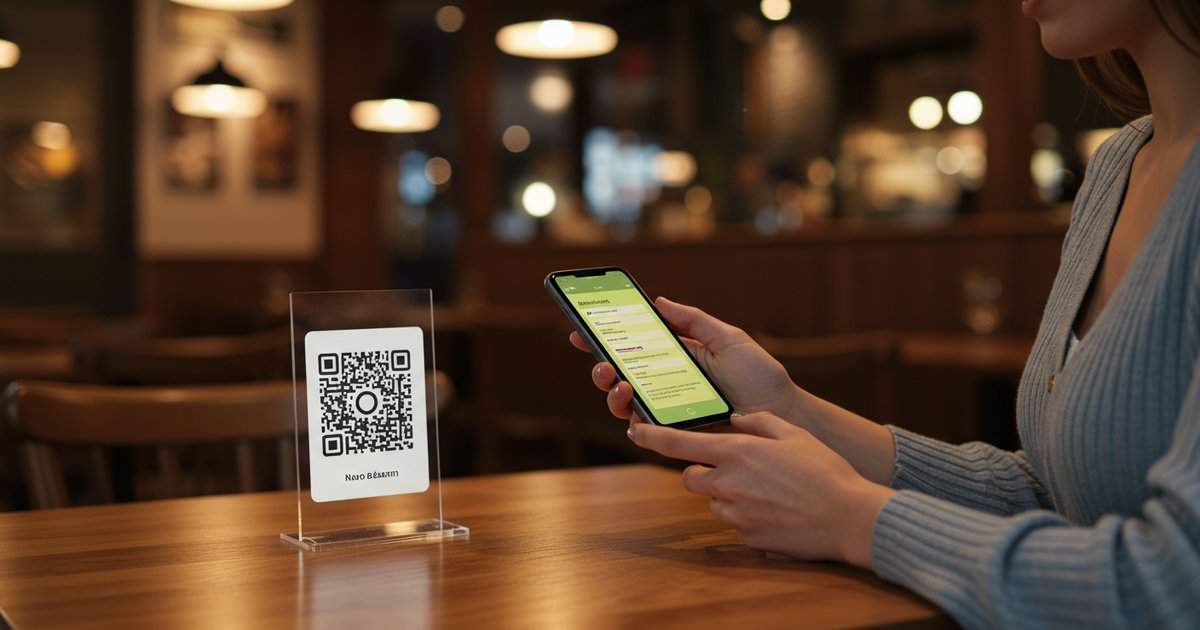
- Customers scan with THEIR own phone
- No contact with shared surfaces
- A clean, modern, reassuring image
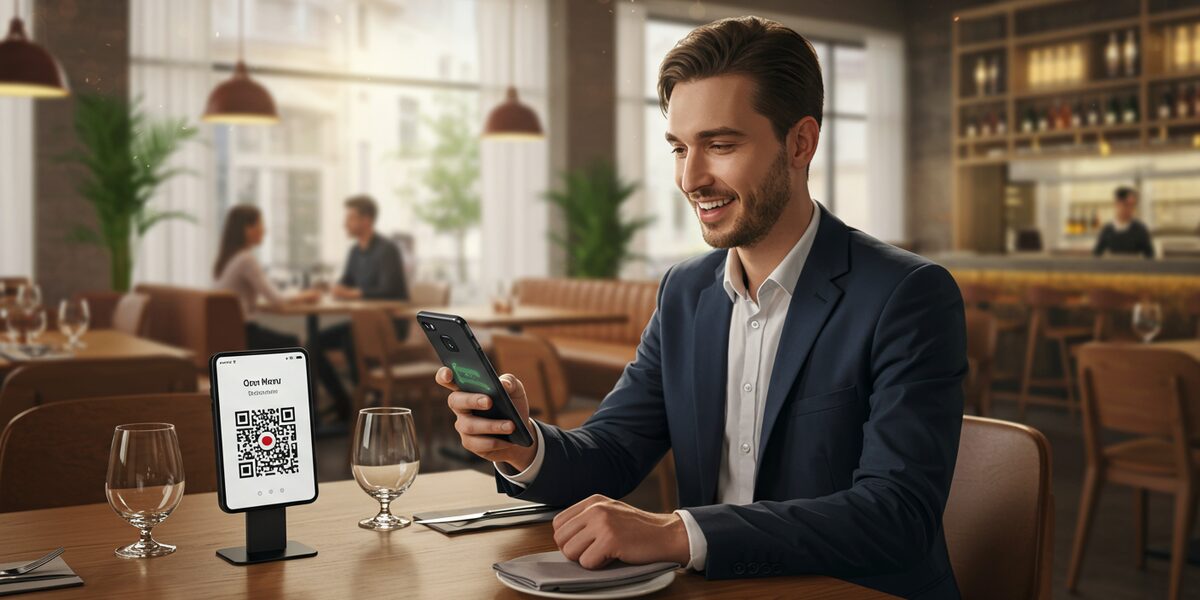
For sensitive customers (families with children, elderly guests, tourists), it's a genuine trust signal. And for you, it's an effortless hygiene win.
3. Accessible 24/7 (even before customers walk through your door)
Your digital menu never sleeps. Unlike a paper menu that lives inside the restaurant, your digital menu can be viewed anywhere, anytime:
- On Google (your Google Business profile)
- On Instagram (link in bio)
- On your website (if you have one)
- Outside your window (QR code on display)
- From a customer's sofa while they're deciding where to eat
The customer journey has changed: today, 84% of diners check the menu BEFORE heading out. If your menu isn't online, you're losing customers before they even reach your door.
Real case: A restaurant in Nantes displays its QR code in the window. Result: +22% more lunchtime bookings over 3 months. Customers know what they're going to eat — they arrive with confidence.
4. Automatic translation = welcome, international guests
Are you in a tourist area? Near a hotel? In a major city?
A multilingual digital menu is your best salesperson.
With a solution like ALaCarte.Direct, your menu can be automatically translated into English, Spanish, Italian, German, Chinese… In one click, at no extra cost.
Before: Your waiter tries to explain "blanquette de veau" in broken English. The customer hesitates and orders a salad to play it safe.
After: The customer reads "Veal stew in creamy white sauce" on their phone, understands it, and orders with confidence.
Direct impact: Higher average spend + better customer experience + positive Google reviews.
5. Photos of your dishes = +35% more orders on featured items
Let's be honest: photos sell.
A 2024 study by Cornell University proved that dishes with photos receive on average 35% more orders compared to dishes without visuals.
With a digital menu, you can:
- Add a mouth-watering photo for every dish
- Visually highlight your signature dishes
- Create desire before the customer is even hungry
Paper menu: 2-3 photos max (and often poor quality at that).
Digital menu: As many photos as you like, in high definition, updated as your food photography skills improve.
Practical tip: Start by photographing your 5 best-sellers. The impact will be immediate.
6. Daily specials, promotions, and out-of-stock items — all in real time
It's Tuesday lunchtime, you've got 12 portions of boeuf bourguignon to shift. Want to push that dish?
With a digital menu, you:
- Add a "Daily Special" badge in 10 seconds
- Move the dish to the top of the menu
- Add a photo + tempting description
- Remove the dish at 2pm when it's sold out
Impact: Your daily specials sell twice as well because they're visible, attractive, and always up to date.
Same goes for out-of-stock items: no more waiters repeating 30 times "sorry, we're out of salmon". One click, the dish disappears from the menu. You add it back tomorrow when the delivery arrives.
Say goodbye to the static menu. Say hello to the living menu.
7. Analytics: finally know what works (and what doesn't)
Do you know how many customers viewed your menu today? Which dishes were looked at most? At what time?
With a paper menu, there's no way to know.
With a modern digital menu, you have the data.
Examples of useful metrics:
- Number of views per day/week
- Most viewed dishes (note: viewed ≠ ordered)
- Time spent on each section (starters, mains, desserts)
- Bounce rate (customers who open and immediately close)
Use case: You notice your "Wines" section gets very few views? Perhaps it's poorly positioned, or your pricing isn't clear. You adjust, test, and improve.
The digital menu becomes a management tool, not just something to read.
8. Sustainability: -200 paper menus per year means 15 kg less CO₂
Let's be honest: sustainability has become a selling point with customers.
The numbers:
- 1 restaurant = ~200 paper menus per year (including reprints)
- 1 menu = ~75g of CO₂ (printing + lamination + shipping)
- Total: 15 kg of CO₂ per year per restaurant
It's not enormous, but it's measurable. And more importantly, it's a marketing message that resonates with your environmentally conscious customers (and there are more of them every year).
Bonus: you can proudly display "Digital menu, zero paper printing" in your window with a little leaf logo. It speaks volumes.
9. A modern customer experience (and it reassures the under-40s)
Let's be frank: in 2026, scanning a QR code to view a menu has become the norm. Not the exception.
For your under-40 customers (and increasingly the over-40s too), it's reassuring. It sends a clear signal:
- "This restaurant keeps up with the times"
- "They understand the modern world"
- "The experience is going to be seamless"
Conversely, a restaurant that refuses to go digital can come across as… outdated. Not charmingly retro — just behind the times.
And no, it doesn't dehumanise the service. Your waitstaff are still there — advising, chatting, connecting. The digital menu is simply a tool that frees up time for what truly matters: the human touch.
10. Free to start (zero excuses not to try)
The really good news in 2026 is that you no longer need to invest £400 to test a digital menu.
Solutions like ALaCarte.Direct let you create and publish your menu for free in under 10 minutes:
- QR code generated instantly
- Menu viewable on all smartphones
- Unlimited updates
- No credit card required to get started
You try it. If you like it, you keep it. If you don't… you've lost nothing.
And if you want to go further (photos, analytics, translation, premium design), you upgrade to a paid plan. But the barrier to entry is gone.
There's simply no excuse not to give it a go.
Conclusion: the digital menu is for now (not tomorrow)
Let's recap:
✅ Savings (printing, time)
✅ Hygiene (zero contact)
✅ Accessibility (viewable 24/7)
✅ Translation (tourists welcome)
✅ Photos (+35% sales on featured dishes)
✅ Responsiveness (menu updated in real time)
✅ Analytics (data to drive decisions)
✅ Sustainability (less paper)
✅ Customer experience (reassuringly modern)
✅ Free (zero risk to try)
The digital menu is no longer an innovation — it's the standard. In 2026, the question isn't "why go digital?" but "why wait any longer?".
🚀 Ready to make the switch?
Create your free digital menu in 10 minutes on ALaCarte.Direct.
No technical skills required. No commitment. Just your menu, accessible everywhere, all the time.
To go even further after creating your menu, consider building customer loyalty with a digital rewards programme — some restaurateurs boost their return rate by +40% by combining a digital menu with a loyalty scheme.
About ALaCarte.Direct
We help restaurants go digital — simply. 90% of restaurants don't have the budget for complex solutions. We solve that: free to start, premium to grow. Because every restaurant deserves to be visible and accessible.
Got questions? Want to share your experience? Get in touch: [email protected]