ALaCarte.Direct
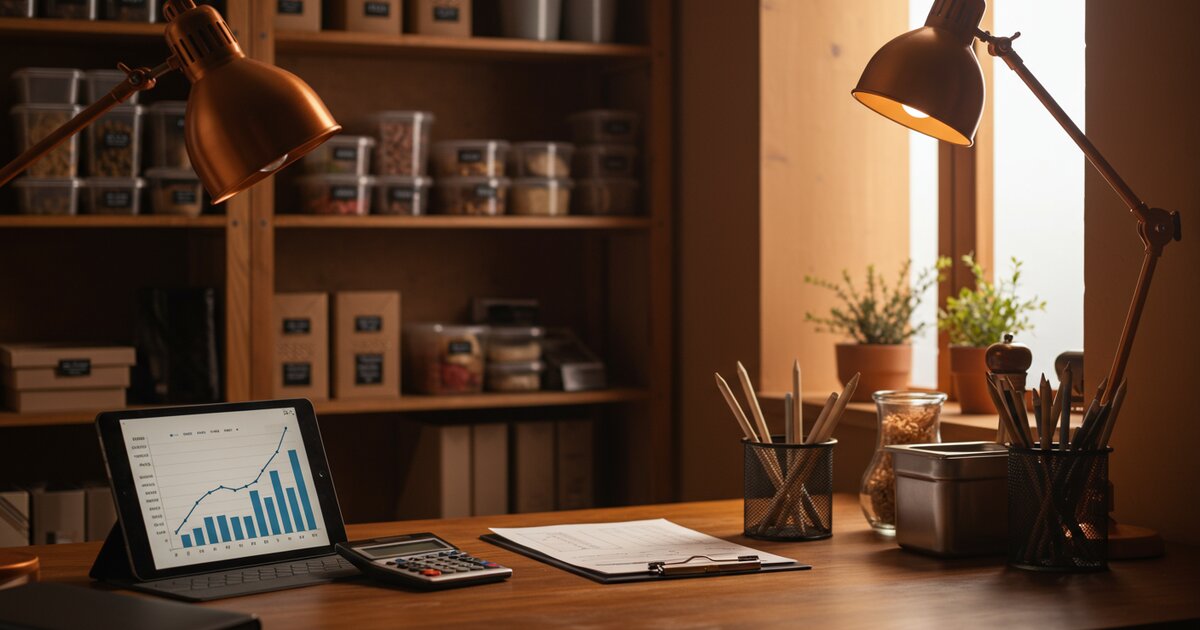
The average net margin for a restaurant hovers between 3 and 5% of turnover. It's one of the most demanding sectors when it comes to profitability: between raw ingredients, labour, rent and fixed overheads, there's little room for guesswork. Yet thousands of establishments operate in the red — not because they lack customers, but because they lack proper financial management.
The good news: optimising your costs doesn't mean lowering your quality. Quite the opposite — the most profitable restaurateurs are often those who deliver the best experience, because they allocate their resources intelligently. A single extra margin point on an annual turnover of £350,000 ($400,000) means £3,500 ($4,000) more in your cash flow — every year. To learn more, understand what customers truly expect so you can refine your offering and reduce waste.
This guide covers the 7 practical levers you can activate right now to improve your profitability without sacrificing the customer experience: food cost, menu engineering, waste reduction, purchasing, staffing, digitalisation and fixed overheads. Each lever is backed by real figures and practical examples you can apply directly in your restaurant. To learn more, avoid these 7 fatal mistakes that destroy restaurant profitability. To learn more, simple digitalisation for your restaurant delivers immediate savings. To learn more, discover the 20 advantages of a digital menu with detailed ROI.
1. Mastering food cost: the cornerstone of profitability
Food cost is the ratio between the cost of ingredients used and the revenue generated. It's the first metric any restaurant consultant examines — and for good reason: in most establishments, this is where 5 to 15 margin points are won or lost. To learn more, learn how to accurately calculate the food cost of your menu with our simple method.
What's the ideal ratio?
In traditional full-service restaurants, the ideal food cost sits between 28 and 32% of the net selling price. Below 28%, you risk undermining perceived quality. Above 35%, you're losing money on many dishes. Fast-casual and quick-service restaurants typically aim for 25–28%, while fine dining establishments accept a higher food cost (35–40%) by compensating with premium pricing and optimised covers per service.
How to calculate it
The formula is straightforward:
Food cost (%) = (Ingredient cost of the dish ÷ Net selling price) × 100
Practical example: A grilled salmon dish costs £4.10 ($4.80) in ingredients (180g portion at £19/kg = £3.40 + garnish £0.70) and sells for £13.70 ($16) net. Food cost = (4.10 / 13.70) × 100 = 30%. Right on target.
Now, if you add a poorly portioned prepared sauce (40g instead of the 25g specified in the recipe card), the cost rises to £4.60 ($5.40), giving a food cost of 33.75%. Multiply that variance by 40 covers per day and 300 days per year: you've just lost £6,200 ($7,200) in annual margin on a single dish.
The recipe card: an essential tool, often missing
A recipe card is the detailed breakdown of a dish with precise weights for every ingredient, their unit cost and the total portion cost. It's the ultimate food cost control tool — yet 60% of restaurants don't have one for their entire menu.
A well-constructed recipe card allows you to:
- Set prices that align with your margin targets
- Train kitchen teams to deliver consistent, reproducible standards
- Spot variances quickly (oversized portions, ingredient substitutions)
- Adjust prices when ingredient costs change (inflation, seasonality)
Start with the 10 dishes that account for 70% of your sales. Create their recipe cards, calculate the actual food cost, and compare it with your target. You'll often be surprised by the gaps you find.
Monthly stocktakes: your safety net
A theoretical food cost (calculated from recipe cards) without cross-referencing against the actual food cost (calculated from stock levels) is meaningless. Monthly stocktakes — or ideally weekly for high-value products — let you measure the gap and identify the causes: waste, theft, portioning errors, or inaccurate yield estimates.
2. Optimising your menu: the power of menu engineering
Your menu isn't just a sales tool — it's a profitability management instrument. Every dish has a different profile: some sell well but generate little profit, others are highly profitable but don't sell enough. Menu engineering helps you identify which items to keep, promote, rework or remove.
The BCG matrix applied to your menu
Dishes are classified along two axes: their popularity (sales volume) and their profitability (gross margin per unit). This gives four categories:
- ⭐ Stars: highly popular AND highly profitable → feature prominently, perfect the presentation, build customer loyalty around these dishes
- 🐄 Plowhorses: highly popular but low profitability → slightly increase the price or reduce the cost (less expensive garnish, slightly revised portion)
- 🧩 Puzzles: low popularity but highly profitable → improve visibility on the menu, train front-of-house staff to recommend them
- 🐕 Dogs: low popularity AND low profitability → remove or completely reformulate
Running this analysis twice a year keeps your menu dynamic, profitable and coherent.
The 70% rule
An overly long menu is a trap: it complicates stock management, increases waste and dilutes your restaurant's identity. The rule of thumb: the top 20% of dishes typically account for 70% of your revenue. A focused menu (12 to 18 items across starters, mains and desserts) is often more profitable than one with 40 options.
The psychology of menu design
Menu engineering is also about how your menu is presented. A few proven principles:
- Highlight your best performers (Stars and Puzzles) visually to draw the eye
- Remove the currency symbol: studies show customers spend more when prices are displayed without the £ or $ sign
- Position profitable dishes in the top right: that's the area readers naturally look at first
- Use evocative descriptions: "Slow-roasted duck breast with Roussillon fig compote" sells better and justifies a higher price than "Roast duck"
3. Reducing waste: recovering what goes in the bin
Food waste costs an average of £13,000 to £26,000 ($15,000 to $30,000) per year for a mid-sized restaurant. Industry studies estimate that 10 to 15% of food purchases end up in the bin in commercial food service — between kitchen losses (peelings, trim), unsold items in the dining room and order mistakes. It's a significant profitability opportunity, often left untapped.
Weigh your bins: the wake-up call
The first step is simple: weigh your food waste for one week, separating it by category (unused products, plate waste, unsold items of the day). This diagnostic often reveals surprises. A restaurant that thought it managed stock well discovers it's throwing away £700 ($800) worth of produce per week.
The FIFO method (First In, First Out)
The FIFO rule — first in, first out — is the foundation of fresh stock management. Products received first must be used first. It sounds obvious, but putting it into practice requires discipline: labelling items with the delivery date, organising fridges and walk-in coolers so the oldest products are always at the front.
Combined with a precise ordering system based on sales history (rather than the chef's or manager's gut feeling), the FIFO method can reduce losses by 20 to 40% depending on the establishment.
Making the most of trimmings and leftovers
Vegetable peelings become stocks and broths. Leftover sauces go into daily specials. Stale bread becomes French toast, croutons and homemade breadcrumbs. This "zero waste" philosophy isn't just a trend — it's sound business sense.
Some practical ideas:
- Meat trimmings → terrines, rillettes, slow-cooked dishes
- Overripe vegetables → soups, velouté, sauce bases
- Opened cheeses → fondues, gratins, croque-monsieur
- Leftover fruit → coulis, homemade sorbets
Too Good To Go and other food waste partnerships
The Too Good To Go platform lets you sell unsold food at the end of service as "surprise bags" at a reduced price (between £3 and £5 / $3.50–$6). Instead of throwing food away, you recover part of the ingredient cost and attract new customers. Around 30,000 restaurants in France currently use this service, and similar adoption is growing across the UK and US. The average result: £45 to £130 ($50–$150) in additional weekly revenue for a 50-cover restaurant.
4. Optimising purchasing: negotiate better, buy smarter
Purchasing typically represents 25 to 35% of a restaurant's turnover. It's the cost line you can act on most directly in the short term. A few structured practices can reduce this ratio by 3 to 5 points without affecting quality.
Audit your suppliers regularly
Many restaurateurs have worked with the same suppliers for years without ever questioning the pricing. That's a mistake. The market shifts, competition plays in your favour, and you have negotiating power you're not using. Run a competitive tender annually on your top 10 purchases: request comparative quotes, present them to your current suppliers, and negotiate.
A simple tender process on meat, dairy and beverages can deliver 5 to 12% savings on those lines — without changing product quality.
Buying groups and purchasing cooperatives
Wholesale buying groups and purchasing cooperatives give independent restaurants access to bulk pricing. Organisations like Sysco, US Foods, Bidfood or regional restaurant networks offer volume-negotiated terms. By joining a buying group, independent restaurateurs report savings of 8 to 15% on their food purchases.
Working with seasonal produce
Seasonal vegetables cost 30 to 50% less than imported out-of-season alternatives — and they're fresher and more flavourful. Adapting your menu to the seasons is both a marketing asset (local, fresh produce) and a major cost optimisation lever. In practice:
- Plan menu changes 4 times a year (spring, summer, autumn, winter)
- Include 2 to 3 rotating "market specials" each week to capitalise on pricing opportunities
- Train front-of-house staff to promote seasonal produce in their recommendations
Direct sourcing: a financial and marketing advantage
Working directly with local producers cuts out the middlemen. On certain products (poultry, vegetables, cheese), savings can reach 15 to 25% compared to traditional wholesalers, while offering superior traceability and quality. It's also a powerful marketing message, valued by an increasingly origin-conscious clientele.
5. Reducing staffing costs without demotivating your team
Labour costs represent 30 to 35% of turnover in a well-managed restaurant — and often considerably more in under-optimised ones. It's the second-largest cost after raw ingredients, and one of the most sensitive to address because it directly affects people and service quality.
Optimise scheduling based on actual footfall
Too many restaurateurs schedule their teams "out of habit" rather than based on reservations and historical footfall data. Yet the variations are significant: a Tuesday lunch in January doesn't need the same staffing as a Friday evening in July. Using reservation data and historical cover counts to build dynamic rotas can reduce unproductive hours by 10 to 20%.
In practical terms: if your data shows that Monday evenings bring in only 40% of Tuesday evening covers, consider closing on Monday evenings — or running a skeleton service with 1 server instead of 3.
Cross-training: a worthwhile investment
Training staff to be multi-skilled — a commis chef who can cover the dish pit, a server who can operate the till — lets you absorb peak periods without hiring and manage absences without chaos. It's also a skills development opportunity that employees themselves value.
Investing 2 to 3 days of cross-training per quarter generates recurring savings on cover shifts and agency staff — which cost 20 to 30% more than a permanent employee.
Better management of overtime
Overtime hours cost 25% more than standard hours (in many jurisdictions, even more). In many establishments, overtime results from poor organisation rather than genuine demand. A simple audit of clock-in records over 3 months often reveals avoidable patterns: meetings outside service hours, poorly organised mise en place, kitchen workflow out of sync with front-of-house service.
6. Digitalise to save: less paper, more data
Digitalisation is no longer reserved for large chains. Today, affordable tools available even for single-site restaurants can reduce operational costs while improving the customer experience and the quality of management decisions.
The digital menu: an immediate cost saving
A restaurant that prints its menus spends between £250 and £700 ($300–$800) per year — sometimes more if the menu changes frequently or if laminating and framing are involved. A digital menu (accessed via QR code) eliminates this cost entirely, while offering total flexibility: updating a price, removing an out-of-stock dish, or adding a daily special takes just seconds from a smartphone.
Table ordering: fewer errors, better service
Order mistakes are expensive: remade dishes, unhappy customers, complimentary meals. Industry research estimates that order errors account for 1 to 2% of revenue lost in direct costs (remade dishes) and indirect costs (negative reviews, customers who never return). Digital table ordering significantly reduces these errors while streamlining service.
ALaCarte.Direct: the free starting point
Tools like ALaCarte.Direct let you get started for free with a professional digital menu, accessible via QR code and automatically translated into multiple languages. For a restaurant welcoming international guests, automatic menu translation can save £170 to £430 ($200–$500) per year compared to printed multilingual menus. To learn more, once your costs are optimised, grow your revenue with these free marketing strategies.
Real-time data: making better decisions
The real value of digitalisation lies in the data it generates. Which dishes sell best? At what time? What's the average spend per service? On which days do customers order the most desserts? This information, cross-referenced with your food costs and staffing rota, allows you to optimise continuously. It's the difference between managing by instinct and steering with facts.
7. Energy and fixed overheads: the forgotten savings
Energy and fixed overheads represent on average 8 to 12% of a restaurant's turnover. They're often treated as inevitable — a "non-negotiable" expense. In reality, savings of 15 to 30% are achievable with a structured approach.
The energy audit: an essential starting point
Before taking action, you need to measure. A simple energy audit — often offered free by energy suppliers or local business support organisations — identifies consumption hotspots and anomalies: a poorly calibrated oven, a walk-in cooler with a faulty seal, dining room lights left on all day for no reason.
In restaurants, the main energy consumers are:
- The kitchen (ovens, hobs, fryers): 40 to 50% of consumption
- Refrigeration (walk-in coolers, fridges): 20 to 30%
- Lighting and heating in the dining area: 20 to 25%
- Air conditioning: variable depending on location and season
Quick-win actions
- Switch to LED lighting: 60 to 75% savings on your lighting bill. Payback in under a year in most cases.
- Maintain fridge door seals: a faulty seal can increase energy consumption by 30%. Monthly checks recommended.
- Schedule equipment on/off times: are your ovens preheating unnecessarily 2 hours before service? Scheduling them to switch on just 30 minutes before generates real savings over the year.
- Renegotiate your energy contract: the energy market is deregulated. Getting competing quotes from suppliers can reduce your bill by 10 to 20%.
Your lease: a negotiable overhead
Rent is often seen as untouchable, especially mid-lease. Yet periods of economic disruption (COVID, post-2022 inflation) have shown that landlords can be open to renegotiation when the conversation is well handled. Ahead of each lease renewal (typically every 3 to 5 years), carry out an analysis of local market rents and present a well-argued case. Reductions of 5 to 15% have been achieved in comparable situations.
Additionally, if your restaurant qualifies for energy efficiency grants or incentives (such as government-backed schemes in the UK, US or EU), these programmes can cover 20 to 40% of the cost of insulation works or replacing energy-hungry equipment.
Conclusion: 7 levers to transform your profitability
Cutting costs in a restaurant isn't about cutting corners — it's about managing with precision. The 7 levers presented in this guide aren't theories: they're practices applied every day by the most profitable restaurants in the industry.
To recap:
- Food cost: recipe cards + stocktakes → aim for 28–32%
- Menu: BCG matrix + menu engineering → remove the Dogs, boost the Stars
- Waste: FIFO + bin weighing + Too Good To Go → 10–15% less waste
- Purchasing: annual competitive tendering + seasonality → 5–12% savings on ingredients
- Staffing: dynamic scheduling + cross-training → 10–20% fewer unproductive hours
- Digital: QR code menu + table ordering → £250–£700/year saved on printing, fewer errors
- Energy: LED + refrigeration maintenance + lease negotiation → 15–30% reduction in fixed overheads
Activated together, these levers represent a potential +5 to +10 net margin points — meaning, for a restaurant with £300,000 ($350,000) in annual turnover, between £15,000 and £30,000 ($17,500–$35,000) in additional profit per year.
Where should you start? With whatever costs you the most. Calculate your food cost this week. Weigh your bins next Monday. Compare your supplier prices this month. And if you don't yet have a digital menu, try ALaCarte.Direct for free — it's the fastest way to begin your digital transition with zero upfront investment.
A restaurant's profitability doesn't come down to a miracle. It comes down to the sum of informed decisions, made every week, with the right tools and the right data.